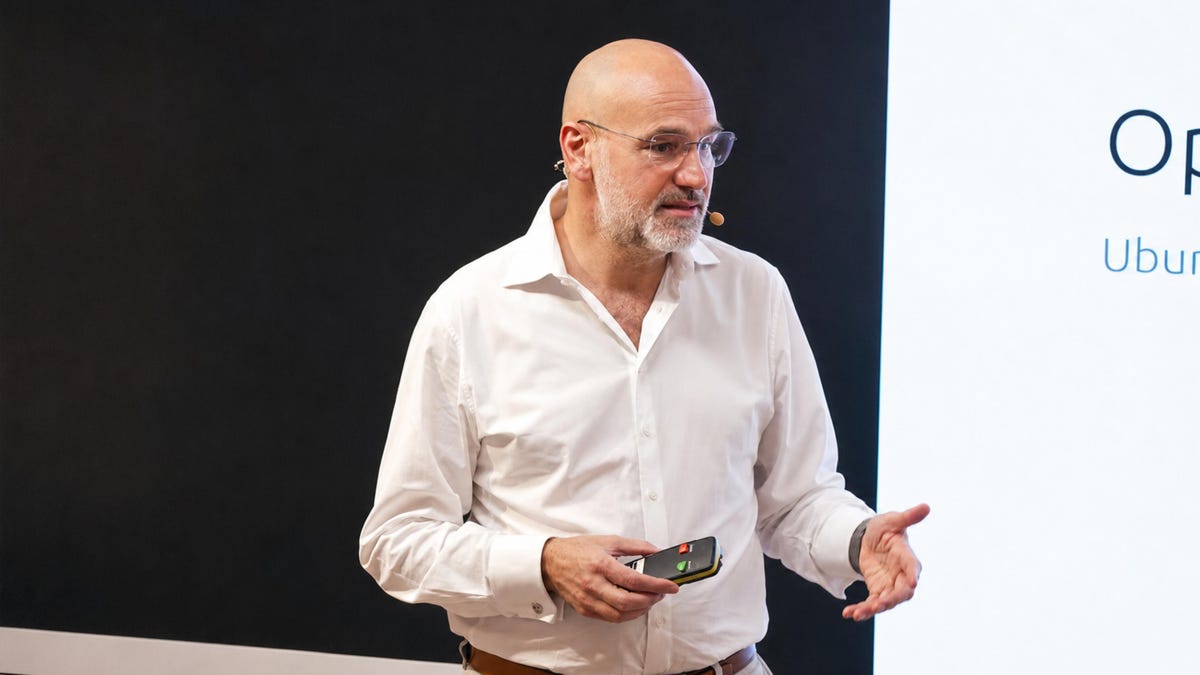
Canonical centers Ubuntu 26.04 on snaps, enhanced isolation, and AI‑focused developer tooling to speed and secure agentic deployments.
At the Ubuntu Summit in London, Canonical founder and CEO Mark Shuttleworth said Ubuntu 26.04 is built for an “AI agentic era,” arguing that open source is the raw material for the next wave of software disruption and that current packaging and release processes cannot keep pace with AI‑driven development. He presented the release as a platform — level response designed to let organizations move faster while retaining safety and auditability.
Canonical laid out several concrete product changes in 26.04 intended to serve that goal: AI‑focused developer environments, ongoing Rust‑based memory‑safety work, and enhanced snap behavior to enable quicker, more controlled delivery of software. These elements are presented as complementary — tooling and language work to reduce classes of runtime bugs, and packaging changes to accelerate deployment without sacrificing governance.
Jon Seager, Ubuntu’s VP of Engineering, described new user‑facing permission prompts for confined snaps as a visible security improvement — for example, prompting the user when a snapped app first tries to access the camera. Seager said those prompts are made possible by kernel and AppArmor plumbing that runs up through snapd and GNOME’s display manager, tying low‑level isolation to the desktop UX.
Shuttleworth framed a move away from traditional packaging formats toward signed, auto‑updated, policy‑driven snaps, arguing that APT and RPM no longer match the pace of agentic development. He cited telemetry from Alan Pope’s Snap Store dashboard showing dozens of snap updates in a single morning across x86, Arm, RISC‑V and Power, and positioned snaps — with confinement, progressive rollouts, channels and enterprise gating — as the safest way to deliver tested bits to a wide range of Linux deployments.
Security and isolation are central to the release’s architecture. Ubuntu 26.04 supports a layered toolbox model that spans snap confinement, Docker/OCI containers, LXD system containers, Multipass VMs and a new class of microVMs. Shuttleworth said that model is essential for “agentic engineering,” because it lets teams choose the right isolation and density tradeoffs: LXD can give agents the illusion of full machines, while microVMs — delivered via an “Open Shell” snap-provide hardened, per‑agent boundaries when kernel isolation alone isn’t sufficient.
To simplify onboarding and reproducible workspaces, Canonical introduced a developer workflow called Workshop, built on LXD. Workshop lets teams commit workspace definitions to a repository so a new human or agent can onboard with a simple flow-by cloning the repo and launching a sandboxed workspace — intended to keep sensitive credentials separated from untrusted or semi‑trusted code.
Sources
Replies (0)
No replies in this topic yet.
