Trent Fowler published an explainer on May 29, 2026 diagnosing a recurring operational problem: Teams that start with one AI assistant to save time often end up, within weeks, with roughly 43 agents, prompts scattered across documents, outputs living in Slack, and half-finished automations spread across multiple places. That sprawl produces inconsistent handling of identical requests depending on who sees them first and creates heavy maintenance overhead for organizations trying to “do AI. scaling.
Fowler defines AI agent orchestration as the practice of coordinating multiple AI agents — each optimized for a specific task-so they can share context, communicate, and adapt collectively toward a goal. He frames orchestration as analogous to project management for software agents and highlights product — level tooling called Zapier Agents that can add agents directly into workflows, link them to one another and to an organization’s tech stack, and do so without code. He points to concrete use cases where orchestration adds value, including triaging customer requests, qualifying sales leads, and generating recurring reports.
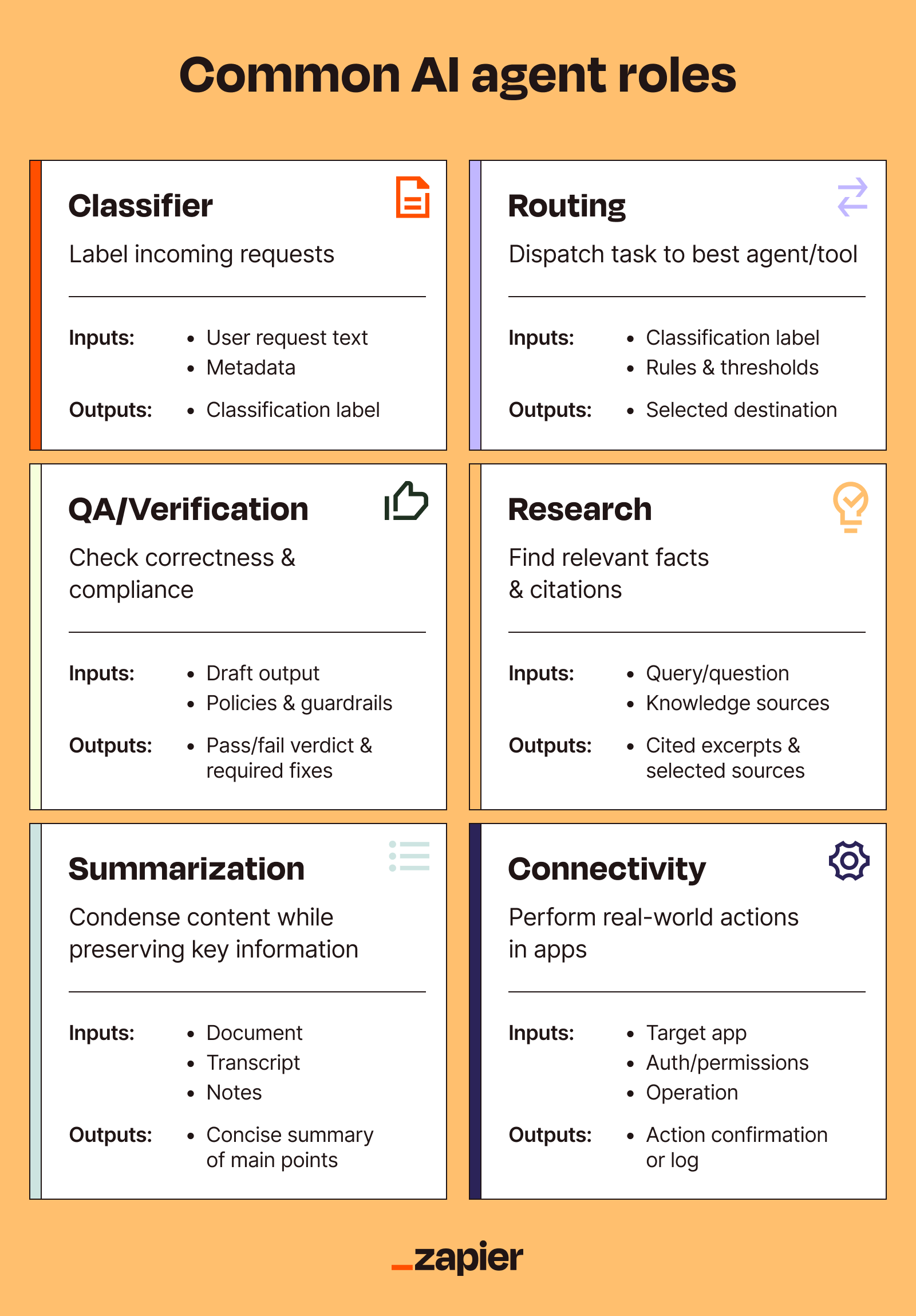
On process, the piece breaks orchestration into practical steps: assess which workflows benefit from agents, plan responsibilities and handoffs, and select specialized agents for narrowly defined tasks. Fowler explicitly recommends using a single agent only for simple, well-scoped jobs where cost and complexity must be minimized; when tasks span multiple steps or require different capabilities, stitching together focused agents yields better reliability. He emphasizes decomposing work into “un-screw-uppable” pieces so models do not face excessive ambiguity at decision points.
Fowler explains the technical rationale for orchestration: current AI models struggle with ambiguity, forks in decision paths, and maintaining cross — context state across long processes. Left uncoordinated, agents operate in silos, duplicating logic and producing fragmentation that scales into technical debt. Orchestration platforms centralize context, reduce repeated work, and enable workflows that a single general — purpose agent rarely achieves reliably at scale, making multi — agent architectures more suitable for complex, real-world automation.
For builders and operators, the article offers clear, actionable implications: start by identifying candidate workflows — customer support ticket routing, lead qualification, or recurring report generation — then decide between a single — agent approach for narrow tasks and a multi — agent architecture for end-to-end processes. Map responsibilities, minimize ambiguity for each agent, and use orchestration tools (including no-code connectors) to integrate agents with existing systems, lowering the implementation barrier while managing cost and complexity.
Sources
Replies (0)
No replies in this topic yet.
