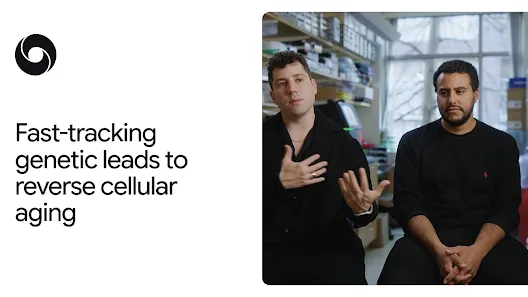
Omar Abudayyeh and Jonathan Gootenberg reported on May 19, 2026 that their Abudayyeh — Gootenberg Lab used a multi‑agent AI called Co — Scientist to accelerate discovery of genetic interventions that reverse cellular aging, identifying and validating factors that move human cells away from senescence toward a more youthful state. The team says the AI shortened key selection and analysis steps, allowing faster experimental iteration on aging — related hypotheses.
In their workflow the lab runs high‑throughput screens that flip thousands of genes on or off to seek changes that reduce senescence. Faced with vast literature and complex screening outputs, the researchers turned to Co — Scientist to prioritize targets and interpret results. The system scanned tens of thousands of papers, weighed competing hypotheses and proposed more than 20 novel, testable genetic factors for follow‑up. Follow‑up experiments validated a couple of the AI‑recommended factors. Those validated recommendations reportedly drove cells into a younger state and improved overall cellular function in the assays the team used, providing early translational signals rather than finished clinical candidates.
The researchers framed two persistent bottlenecks — choosing which genetic pathways to test and making sense of massive screening data-and presented Co — Scientist as a tool for both. The AI generated prioritized leads from the literature during ideation and then contextualized screening outputs against years of scattered studies, effectively acting as an automated research partner through ideation and analysis stages.
A concrete impact the team reported was time‑to‑insight: manually connecting screening hits to prior studies and plausible mechanisms could take a researcher up to six months, they said, while running results through Co — Scientist alongside the literature reduced that work to a few days. That compression of analysis time lets the lab iterate much faster on which genetic manipulations to pursue experimentally. The screens targeted shifts away from cellular senescence toward youthful states in tissues such as skin, hair and muscle. Principal investigators emphasized practical biological goals: the validated factors improved measures of overall cell function and could guide subsequent mechanistic studies or therapeutic exploration rather than serving as immediate clinical candidates.
The May 2026 post also linked Co — Scientist to several concurrent research priorities, including repurposing medicines for liver fibrosis, new integrated toolkits for ALS, accelerating liver disease mechanism discovery and searching for molecular switches in emerging infectious diseases. For builders and labs, the takeaway is that an AI workflow which both proposes hypotheses and maps results back onto the literature can materially shorten experimental cycles and broaden the set of testable genetic hypotheses.
Sources
Replies (0)
No replies in this topic yet.
