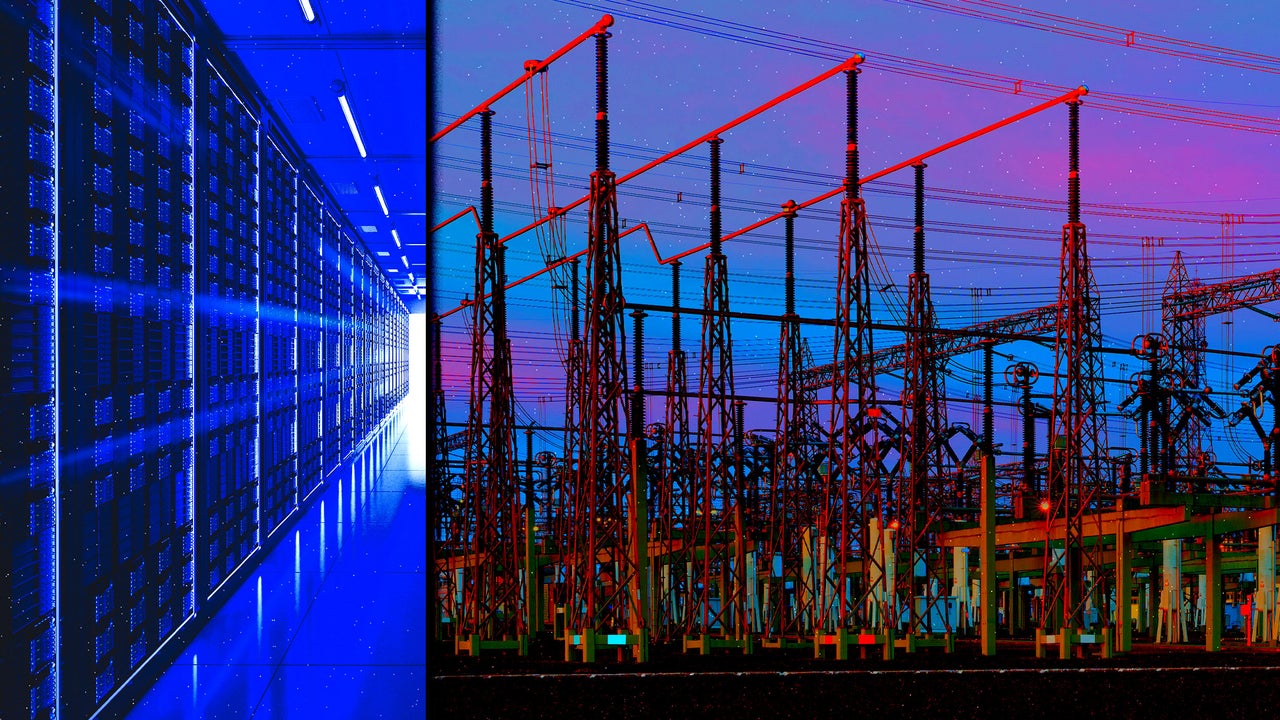
U.S. utilities are facing an unprecedented surge in electricity demand from AI data centers, EVs, factories and broader electrification, and interconnection requests are flooding planning and permitting systems.
U.S. utilities entered 2026 expecting modest growth but instead found ramping demand quickly exhausted planned capacity: Pacific Gas & Electric reported that nearly a year’s worth of projected new demand was claimed within two months. Interconnection applications are queuing far faster than legacy planning and permitting systems — built for decades of near‑flat demand — can process; David Sawaya, PG&E’s director of rate‑reducing load growth, says queues have swelled 50% to 150% across utilities in roughly two years and warns, “The process does not move at the speed of business.
Independent analyses frame the scale. A Lawrence Berkeley National Laboratory study found load growth that historically stayed under 1% jumped to about 4% at some operators last year. Bain and Company projects AI data centers could consume up to 9% of total U.S. electricity by 2030, adding more than 150 terawatt‑hours of annual demand. Pew Research Center data indicate roughly a third of that projected new demand will cluster in Virginia, Texas, and California, intensifying local transmission and distribution constraints.
The surge is not solely AI‑driven: widespread electric vehicle adoption, new manufacturing facilities, and industries shifting from diesel and gas to electric power are all drawing on the same aging infrastructure. The Southwest Power Pool-which oversees roughly 56 gigawatts of capacity across parts of 17 states — said last year’s demand spike resembled two large nuclear plants suddenly appearing on its system, underscoring the suddenness and magnitude of new load additions.
Project backlogs are vast and consequential. By late 2024 Lawrence Berkeley National Laboratory counted more than 2,600 gigawatts of proposed generation and storage projects waiting to interconnect, a volume exceeding twice the country’s existing installed capacity. That queue creates practical bottlenecks for data centers, clean‑energy projects, and industrial electrification efforts that require timely grid access to proceed.
Operationally, many utilities lack the digital maturity to manage rapid change. Hitachi Energy’s digital enablement lead says utilities lag roughly a decade behind oil and gas in adopting AI and predictive operations. Organizations still operating on a break‑fix maintenance model often cannot locate assets with GPS‑level precision, complicating planning, outage response, and the targeted upgrades needed to accept large new loads.
For builders and planners the implications are concrete: expect longer interconnection lead times, concentrated regional constraints (especially in Virginia, Texas and California), and a growing need to account for grid upgrade timelines in project economics. The current grid and regulatory processes were not designed for this pace of load growth, making interconnection reform, faster permitting, and utility digitalization critical levers to avoid prolonged bottlenecks.
Sources
Replies (0)
No replies in this topic yet.
