At Data Center World 2026 in Washington, D.C., Ampace and Eaton presented a joint technical case to turn battery‑backed uninterruptible power supplies (UPS) from passive backups into millisecond‑scale stabilizers for gigawatt‑class AI facilities. The companies said this change matters because modern AI training loads create abrupt, synchronized power pulses that the grid and traditional standby generators cannot absorb quickly, threatening voltage stability and forcing expensive oversizing. If adopted, the approach would act where the disturbance starts — at the rack-preserving compute performance and lowering upstream risk.
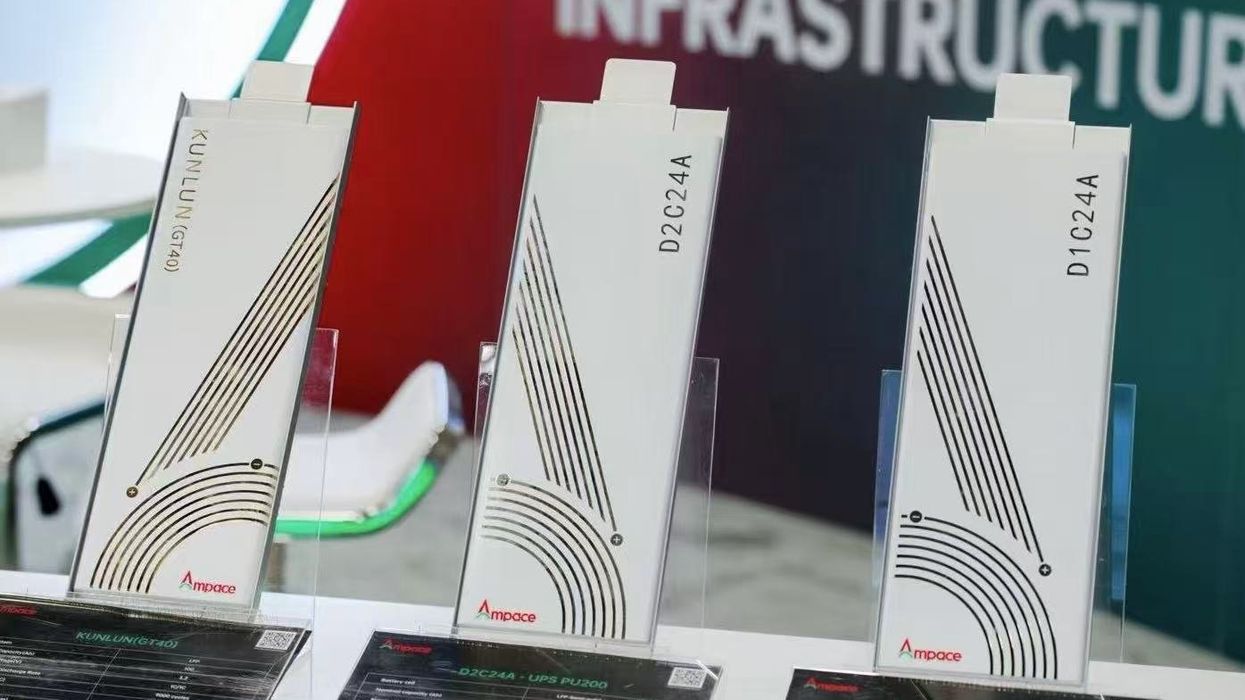
Ampace centered the hardware argument on its PU Series semi‑solid cells, which the company described as low‑electrolyte designs with ultra‑low direct current resistance (DCR) and high cycle capability. According to Ampace, those cell characteristics let the batteries deliver very fast bursts of power and recover repeatedly, effectively acting as high‑speed “shock absorbers” at the rack source to neutralize millisecond‑level spikes and support racks running at 100 kW+ densities.
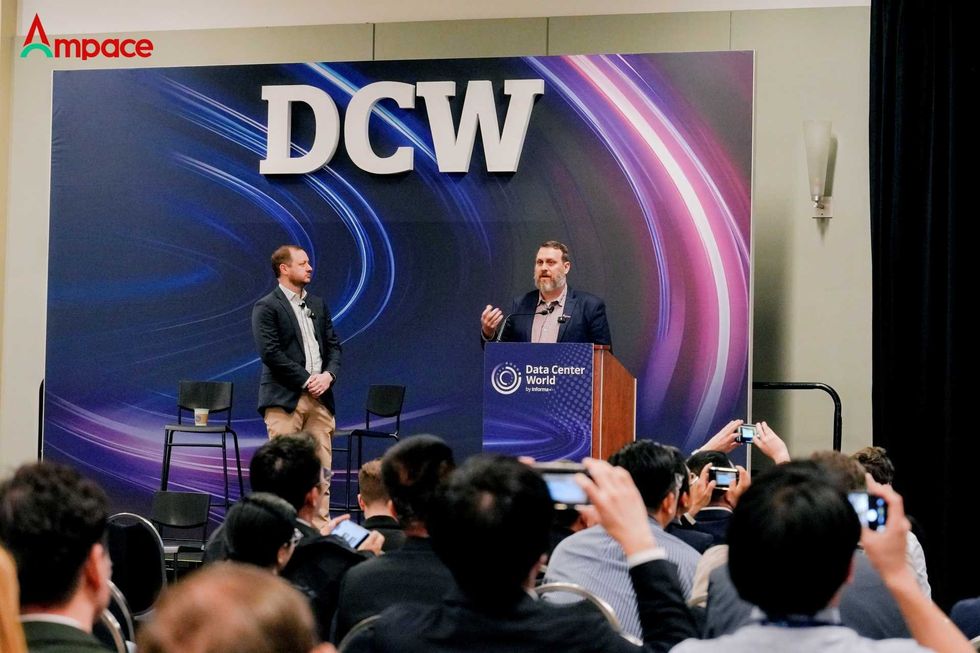
Eaton framed the systems side, emphasizing mature UPS architectures — such as double‑conversion topologies — and upgraded power electronics as the necessary control and delivery layer. The session positioned UPS‑integrated battery systems as the scalable foundation for facilities moving toward gigawatt deployments, pairing Ampace’s fast‑responding chemistry with Eaton’s system intelligence to coordinate timing, flow and handoff between storage and power distribution.
The market driver for the proposal is the behavior of modern GPU clusters. These clusters create high‑frequency, abrupt pulse loads that can induce transient voltage sags and frequency instability across the local power chain. Utility grids and conventional backup assets like diesel or gas‑turbine generators respond on seconds to minutes, not milliseconds, leaving operators to choose between risking instability or building significantly oversized electrical infrastructure.
The combined approach proposed at the session aims to stabilize the local power loop before disturbances propagate upstream, reducing the chance of grid instability and lowering dependency on overprovisioned cabling, transformers and generation capacity. Presented as a way to preserve peak GPU throughput at high rack power densities, the strategy focuses on local mitigation — containing instability at its source rather than shifting stress to the wider facility or grid.
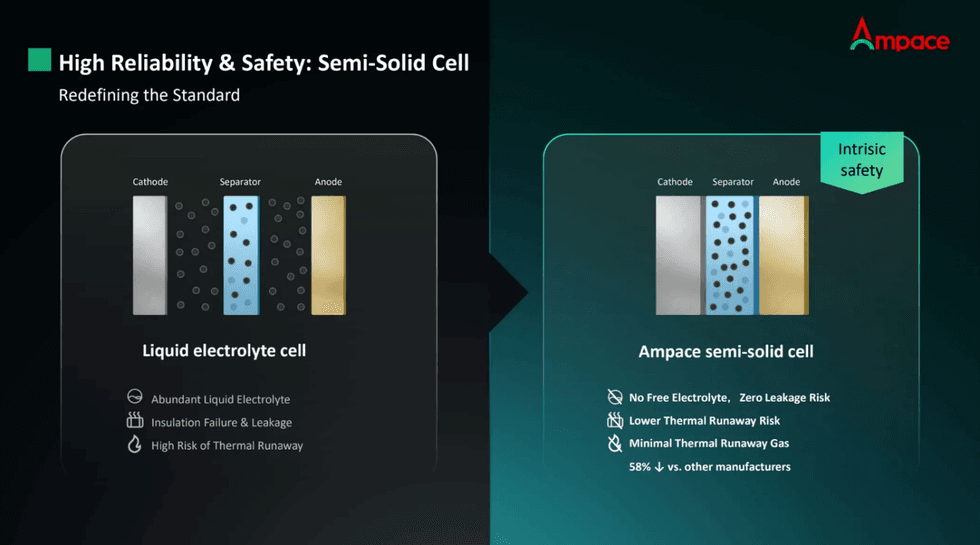
Speakers warned that practical adoption requires more than cell chemistry. Builders and operators will need sophisticated control algorithms that synchronize energy storage response with UPS controls, targeted power‑electronics upgrades to handle rapid exchanges, and independent validation of safety and performance claims. Ampace noted that its semi‑solid chemistry reduces liquid electrolyte volume and associated leakage or thermal‑runaway risks, a safety attribute the session tied to continuous, high‑rate AI workloads.
Sources
Replies (0)
No replies in this topic yet.
