AWS is spearheading a significant evolution in conversational artificial intelligence, charting a strategic course for developers to transform traditional text-based agents into highly interactive and natural voice assistants. This initiative leverages the advanced capabilities of Amazon Nova 2 Sonic, offering a comprehensive roadmap for migrating existing text agent functionalities to a voice — driven paradigm. This strategic guidance arrives at a pivotal moment, as diverse industries, including finance, healthcare, education, social media, and retail, actively seek scalable and sophisticated solutions for real-time speech interactions, driven by user expectations for faster and more natural interactions.
The transition from a text agent to a voice assistant is fundamentally more complex than simply adding a new interface. It necessitates a deep understanding of divergent user interaction models and underlying technical requirements. Text agents primarily handle typed input, allowing users to consume information at their own pace, with options for scrolling, copying, or following links. In contrast, voice assistants operate with real-time spoken audio streams, where interruptions, pauses, and the continuous flow of speech are integral. This distinction impacts everything from how input is processed to the style and timing of agent responses, as well as the underlying data transport mechanisms, which shift from stateless HTTP/REST to bidirectional streaming for persistent, real-time audio.
A critical difference lies in response design. Text agents are built to deliver comprehensive information in formats like paragraphs, lists, or tables, where all details can be presented simultaneously for the user to read and digest at their leisure. For voice agents, responses must be conversational, concise, and structured for listening, often delivering one piece of information at a time. For instance, a text-based banking agent might display an entire account summary with multiple balances and payment due dates. A voice agent using Amazon Nova 2 Sonic, however, would break this down, delivering information in digestible chunks, such as "You have three accounts. Your checking account ends in 4521 with a balance of three thousand two hundred forty — five dollars.
Another significant architectural shift revolves around latency tolerance. While text users typically accept mid-latency, with typing indicators masking wait times, voice interactions demand ultra — low latency. Any delay in a voice conversation, even a few seconds, can feel like a connection has dropped or the system has failed. This stringent requirement means voice agents must be architected for speed, prioritizing rapid first audio delivery within hundreds of milliseconds. Amazon Nova 2 Sonic is designed to support this through features like asynchronous tool calling, which allows the conversation to flow naturally even while backend tools process requests.
The nature of turn-taking also undergoes a profound transformation. Text conversations are inherently strict request — response cycles, where a user types, hits enter, and waits for a reply. Voice conversations, conversely, are fluid, overlapping, and highly interruptible. Users frequently "barge — in" or pause mid-sentence, expecting the agent to understand and respond naturally. Native speech — to-speech models like Amazon Nova 2 Sonic are crucial here, as they internally handle complex processes such as voice activity detection (VAD) and turn detection. This allows the system to manage conversation context without requiring the entire history to be resent with each turn, facilitating a more natural and dynamic spoken dialogue.
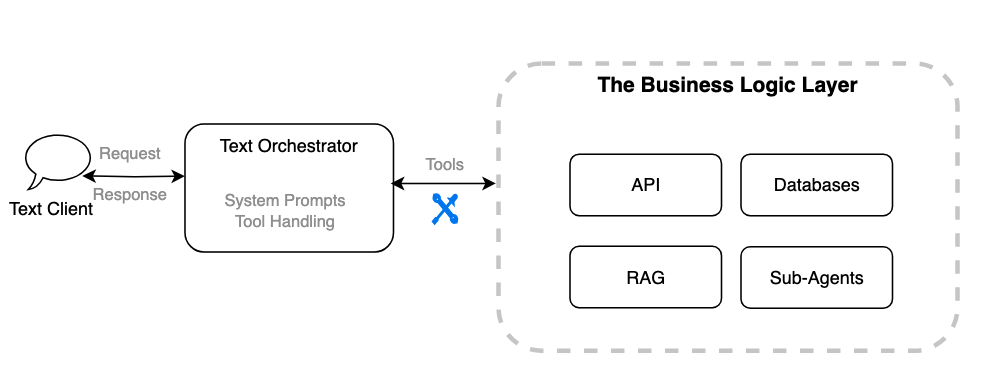
From an architectural standpoint, migrating involves re-evaluating components beyond just the client application. While the conceptual design of a text agent typically comprises a client, business logic, and backend services, each must evolve to meet the unique demands of voice. AWS provides guidance on how to adapt these components, addressing common concerns such as the reuse of existing sub-agents and tools, and the crucial adaptation of system prompts for the conversational context. To streamline this complex process, a specific Skill is available in the Nova sample repository.
Sources
Replies (0)
No replies in this topic yet.
