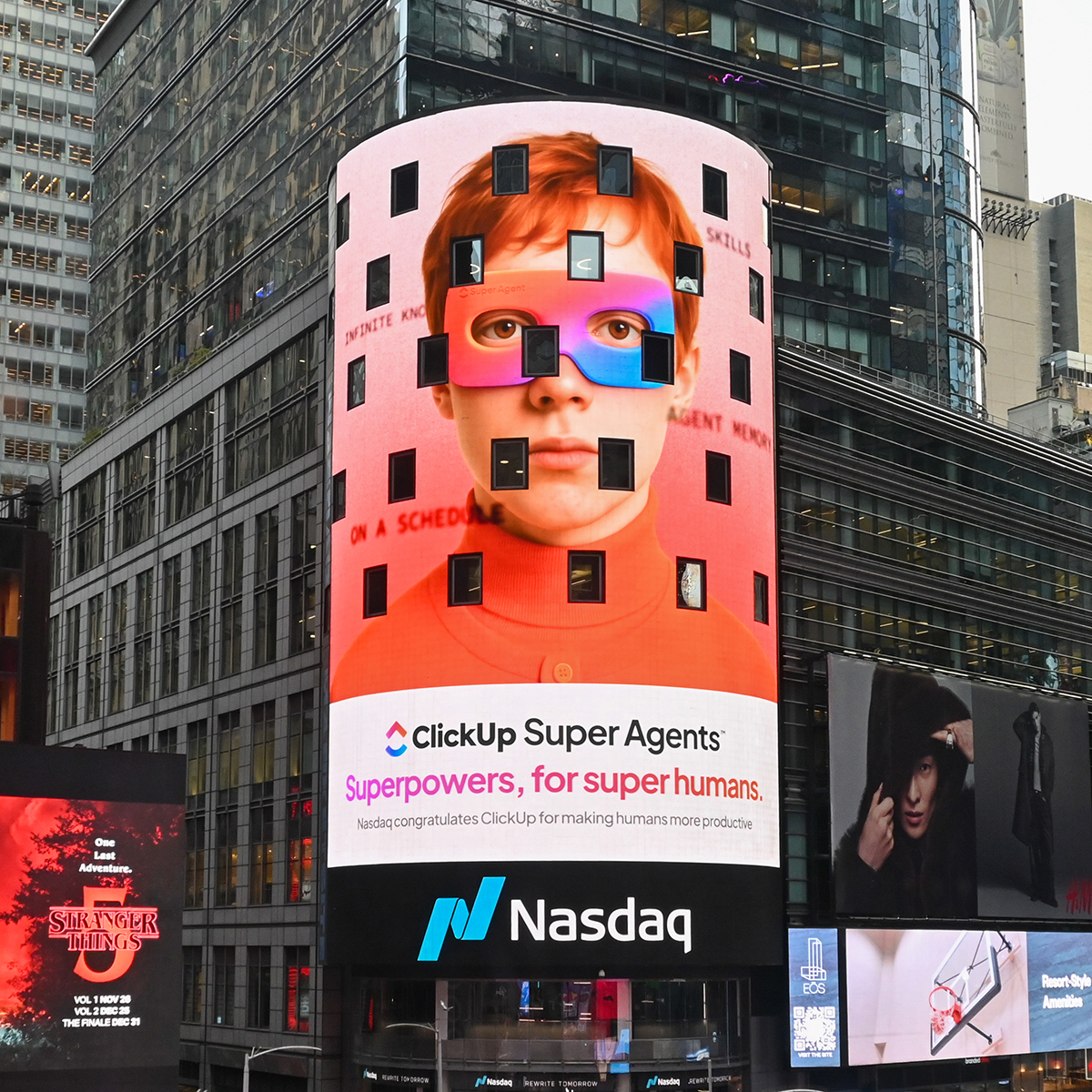
ClickUp (Mango Technologies Inc.) announced Brain 2 on May 12, 2026 — a significant upgrade that moves its Brain assistant from question‑and‑answer support to executing multi‑step work tasks with direct, permissioned access to workspace data. The change matters because it lets chosen models not only summarize information but act on it and produce complex deliverables — from polished slide decks to interactive dashboards, websites and executable code-in a single prompt.
Technically, Brain 2 injects workspace context directly into model inputs and automatically routes workflow steps among multiple large language models depending on task type. The platform also introduces persistent memory to retain user preferences, formatting rules and organizational context across sessions, and it uses an "optimized context graph" to speed and improve context retrieval. Jay Hack said Brain² "proactively references these sources used in generating its responses, so you can easily check its work."
ClickUp has expanded Brain 2 through acquisitions and capital to strengthen contextual understanding and developer automation. The company has raised more than $530 million and is preparing to go public, and it recently acquired enterprise search startup Qatalog Inc. and AI coding shop Codegen Inc. According to Hack, Qatalog’s ActionQuery engine — a permission‑aware AI search with more than 100 integrations — now underpins Brain²’s cross‑workspace retrieval.
The release emphasizes governance and enterprise safety. Brain 2 enforces access controls in real time, with Hack highlighting "zero index lag," and links assistant responses back to source material for transparency. It also includes an "anti‑sycophancy" system prompt designed to make the assistant challenge questionable user directions rather than simply agreeing, a check aimed at preventing models from reinforcing incorrect or risky instructions.
Beyond ClickUp’s own environment, Brain 2 supports the Model Context Protocol to reach external tools such as Gmail, GitHub, Figma and Slack, and it can shift tasks between models mid‑execution when different steps require different capabilities. Founder and CEO Zeb Evans framed the change as giving models permissioned operational ability: "Any model you choose gets full access to your workspace and can act on it, not just answer questions about it." For builders, ClickUp says this will require auditing generated code and outputs and planning workflows around permissioned, real‑time context retrieval.
Sources
Replies (0)
No replies in this topic yet.
