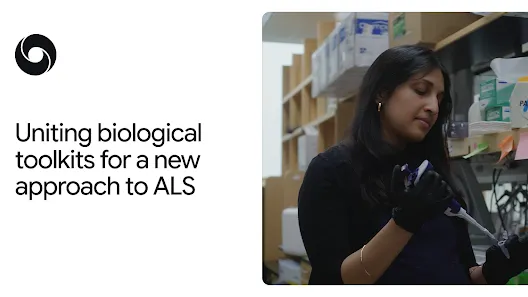
Co — Scientist, an AI multi‑agent system, reduced months of ALS literature review into a prioritized set of testable hypotheses for researchers at complementary labs, accelerating the move from idea to experiment. The tool supported mechanical engineer Ritu Raman, who builds engineered living nerve and muscle tissues to model voluntary movement disorders, and chemical biologist Ryan Flynn, who maps RNA on cell surfaces to study intercellular communication and pathogen entry. By taking practical laboratory trade‑offs into account, the system produced ranked research directions that the teams could pursue immediately.
The assistant rapidly interrogated and synthesized sprawling publications and datasets, assembling evidence that linked the two groups’ toolkits and ranking potential directions by feasibility and estimated risk‑reward. Rather than replacing expert judgment, Co — Scientist condensed background work that would ordinarily take months into a compact set of prioritized leads, converting broad conceptual ideas into specific experimental hypotheses aligned with available methods and constraints.
Several of the top leads converged on biology at the cell surface, suggesting that RNA there may influence cellular signaling — a question that required molecular decoding beyond Raman’s tissue‑engineering expertise. That gap prompted iterative collaboration: Raman’s lab can implement tissue perturbations and measure physiological outcomes, while Flynn’s surface‑RNA mapping can trace the molecular interactions underlying those outcomes. they used its outputs to synthesize and adapt the highest‑ranked ideas into new research pathways rather than adopting any single suggestion verbatim.
The immediate technical consequence is a concentrated hunt for novel RNA‑based mechanisms and, potentially, RNA‑based drugs targeting ALS. Practically, the case demonstrates how computational hypothesis generation can be paired with orthogonal experimental modalities — engineered tissue models and cell‑surface mapping — to bridge mechanistic gaps in translational research. multi‑agent systems can accelerate literature review and hypothesis ranking, but cross‑disciplinary teams remain essential to validate mechanisms and convert leads into experiments.
Sources
Replies (0)
No replies in this topic yet.
