Databricks officially announced the native integration of OpenAI's latest flagship language model, GPT-5.5, into its enterprise data platform. Enterprises can now use GPT-5.5 to deploy intelligent agents and automate programming through the Codex environment or similar tools. A key aspect of the release is the solution's availability on Amazon Web Services, Microsoft Azure, and Google Cloud Platform infrastructures. The partnership, announced by Databricks co-founder and VP of Engineering Patrick Wendell and OpenAI Chief Revenue Officer Denise Dresser, aims to securely integrate advanced artificial intelligence into the daily workflows of large companies.
The Unity AI Gateway, a unified security and management gateway, serves as the key link for this integration. This architectural solution enables centralized control over both calls to the generative GPT-5.5 model and code writing sessions in Codex via a single dashboard. The management system provides companies with the ability to set detailed access rights and request limits for individual users or workgroups, helping to avoid uncontrolled expenditures. Built-in protection mechanisms automatically monitor for prompt injection attempts, ensure content security, and identify personal data, applying these filters individually for each routing endpoint.
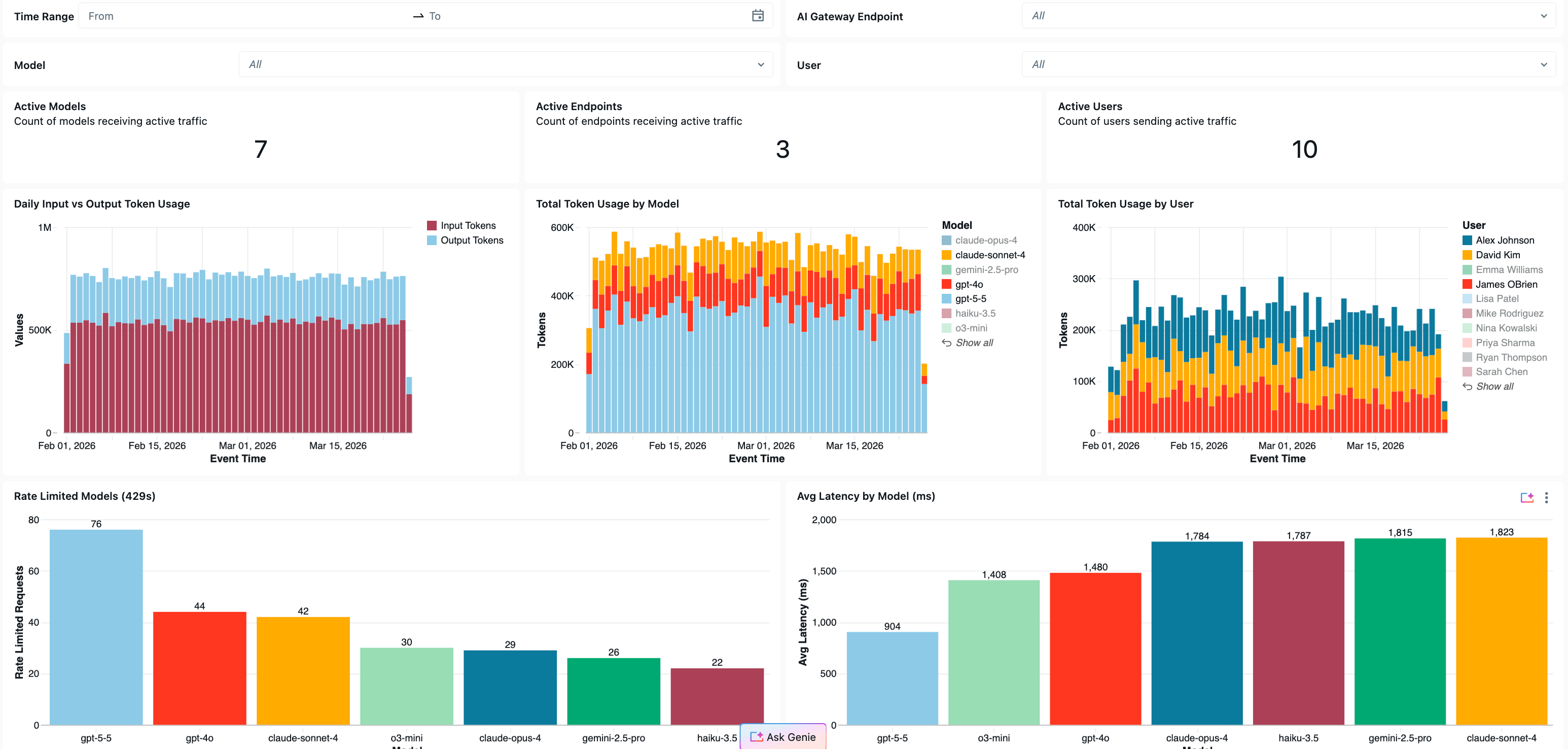
Beyond basic access settings, Unity AI Gateway provides deep operational auditing and algorithmic continuity. The integration supports strict control of the model context protocol, logging every tool call made by autonomous agents to ensure full transparency of their actions. In case of exceeding request limits, the system automatically redirects traffic to backup language models, preventing the interruption of critical business processes. For monitoring, all request data is logged into customers' own Delta tables, preserving user IDs, token consumption, response latencies, and total computation costs. Financial accounting is also significantly simplified due to the generation of a single consolidated bill for GPT-5 usage.
The implementation of GPT-5.5 significantly expands the capabilities of the Genie service, which provides a natural language environment for advanced analytics within the Databricks platform. Thanks to the improved cognitive abilities of OpenAI's new model, business users can access complex enterprise data arrays using simple English. The system deeply understands the semantics of business processes and the data ontology of a specific company, enabling users to explore metrics, formulate situational queries, and automate intellectual tasks that previously took hours or even days to complete.
The updated architecture opens new avenues for developing custom autonomous tools through the Agent Bricks environment. GPT-5.5's enhanced planning and reasoning capabilities allow agents to take on complex multi-step workflows, automating routine operations across entire departments. Developers can create such assistants and deploy them as managed serverless Databricks Apps. Furthermore, GPT-5.5 easily integrates into declarative Lakeflow Spark pipelines for generative data extraction and transformation tasks. The model is capable of processing unstructured artifacts, such as scanned PDF documents and complex tables, performing their precise classification and summarization.
To get started with the new model, the cloud platform offers an interactive AI Playground sandbox, where technical specialists can practically test the capabilities of GPT-5.5. The environment allows for parallel comparison with other language algorithms, configuration of text generation parameters, and immediate export of created prompts into working notebooks or SQL scripts. Although the provided materials do not disclose the exact financial terms for using GPT-5.5 or benchmarks for performance speed compared to previous model versions, the current toolkit allows for quick setup of controlled access endpoints with active cost limits and internal auditing systems already in place.
Sources
Replies (0)
No replies in this topic yet.
