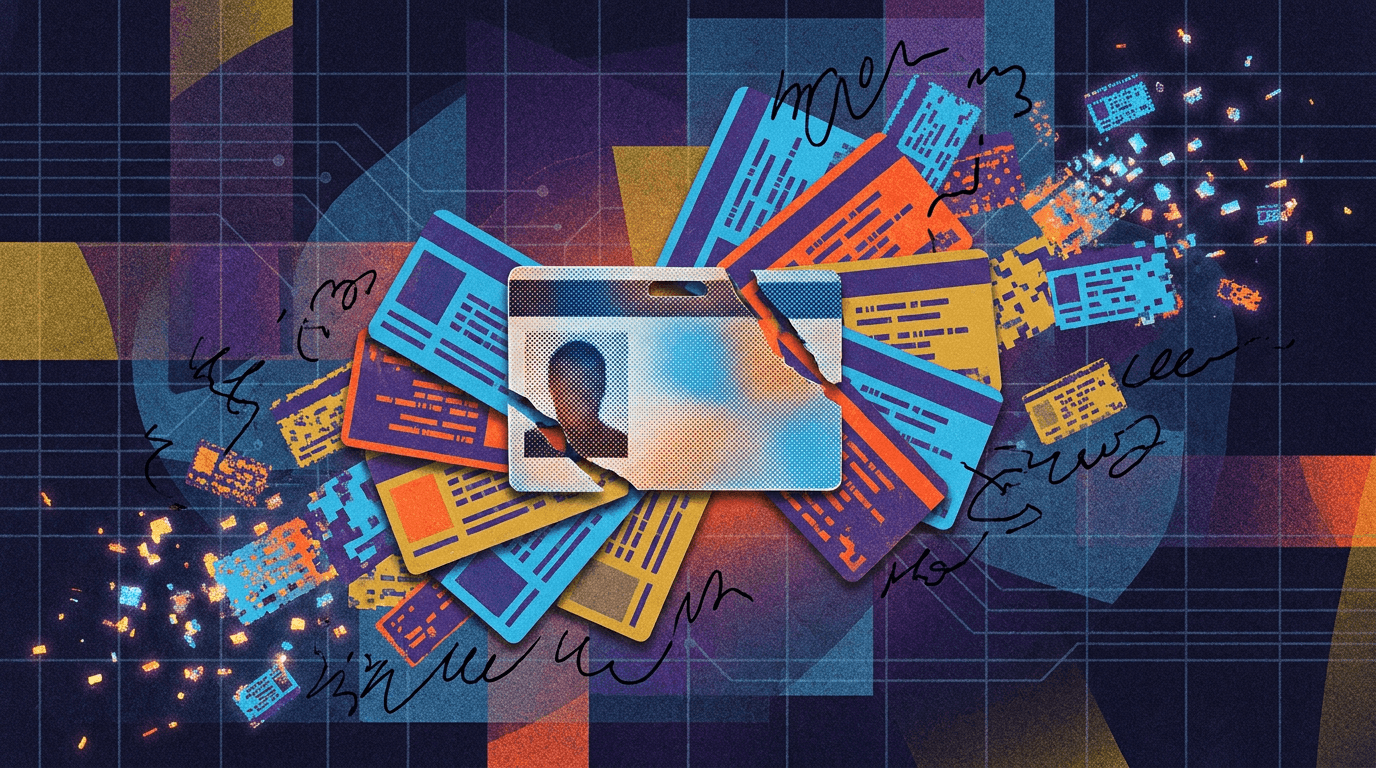
A May 11, 2026 investigation documents identity‑theft operations that chain generative models and agentic tools to automate social security number probing, deepfake ID creation, and mass account opening, enabling large‑scale fraud.
Journalist Jennah Haque discovered her identity had been used to apply to 13 colleges and request financial aid without her consent, receiving a welcome package from the Ultimate Medical Academy in Tampa despite never applying. The fake submissions matched her name, date of birth, address and social security number — only the listed high school was incorrect — and could have unlocked more than $50,000 in student loans, showing how individual frauds now scale rapidly.
The investigation traces that scale to specialized generative models and agentic systems that automate the labor of fraud. Tools such as FraudGPT, reportedly trained on breach data, can test hundreds of thousands of social security numbers in minutes until they find valid combinations tied to dormant or vulnerable accounts. Autonomous sub‑agents scrape darknet stores for personal data, simultaneously contact multiple banks under different identities, and auto‑fill complex government and financial forms, producing a throughput a U.S. financial‑aid employee described as nearly impossible without AI.
Industry data in the report frames the trend as systemic. The Identity Theft Resource Center recorded its highest number of data compromises in 2025 since tracking began in 2005. Experian says its consumer‑protection team handled about 5,000 data breaches last year and that roughly 40 percent of those incidents involved AI; the firm expects agentic AI to become the primary driver of attacks in 2026. TransUnion and other firms report an uptick in organized, multi‑step fraud schemes that chain multiple identities and account openings.
Tactics now commonly mix deepfakes and staged onboarding with classic fraud plays. Criminals submit AI‑generated driver’s licenses for physical ID checks, then run 'bust‑out' schemes — opening small local credit lines, graduating to institutional ones, and quickly maxing them out. Experian’s Michael Bruemmer said these attacks are faster, more sophisticated and visually more convincing. Fraud‑prevention CEO Tamas Kadar added that attackers can now assemble complete phishing sites without writing code, complicating detection for both human recipients and automated filters.
Companies are deploying both AI‑based defenses and traditional controls. Reported countermeasures include automated liveness checks to detect AI‑generated selfies (used by TransUnion), AI‑driven risk scoring and transaction analysis from firms such as SEON, and proprietary signals keyed to anomalous onboarding flows. Consumer safeguards cited by experts include credit freezes, multi‑factor authentication and passkeys, plus avoiding public Wi‑Fi or using a VPN as practical mitigations.
For builders and defenders the investigation highlights concrete technical priorities: improving liveness and deepfake detection; instrumenting onboarding to spot agentic workflows and high‑velocity SSN checks; scaling risk scores that combine behavioral and provenance signals; and adding human review where automation is most vulnerable. With practitioners warning that agentic systems will drive more attacks in 2026, integrating automated AI defenses alongside established identity controls is becoming an operational necessity.
Sources
Replies (0)
No replies in this topic yet.
