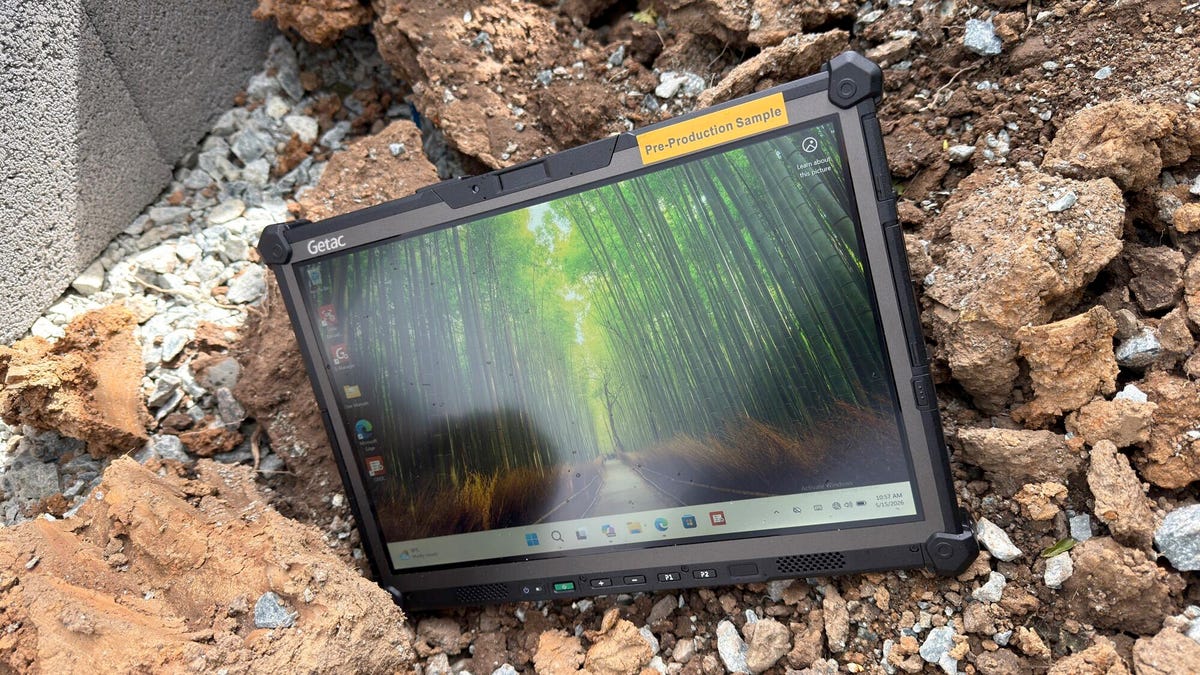
A May 23, 2026 hands‑on review gave the Getac G140 a 3.5/5, praising its rugged design, hot‑swap batteries and Copilot+ support for field AI use but warning that weight, price and a dim screen hinder daily field work.
The Getac G140 earned a 3.5 out of 5 in a May 23, 2026 hands‑on review by Adrian Kingsley‑Hughes, which found a capable, purpose‑built tablet that brings on‑device AI support to field teams but sacrifices some everyday usability. The score reflects a balance: the G140’s AI‑ready hardware and rugged build matter for first‑responder and utility workflows, yet trade‑offs in weight, brightness and cost limit its appeal for teams that prioritize lighter, more affordable devices.
Under the hood the G140 is built around a 14‑inch 1920×1200 IPS touchscreen and offers AMD Ryzen AI processors from the Ryzen AI 5 and Ryzen AI 7 families, including Pro variants. Configurations span 16GB to 64GB of DDR5 RAM and up to 2TB of PCIe NVMe SSD storage. The tablet runs Windows 11 Pro and is advertised to support Microsoft’s Copilot+ features, positioning it to run native Windows AI tools in the field.
Designed for harsh conditions, the G140 includes dual hot‑swappable batteries for extended uptime and a roomy port selection — DisplayPort, a USB 3.2 Gen 2 Type‑A and Gigabit Ethernet among them-to support peripherals and connectivity on site. Its enclosure is ruggedized against mud and rain, targeting situations where a traditional laptop would be impractical and continuous operation is required.
The review frames the G140 squarely at professional markets: fire and rescue, automotive and utility crews that need more compute than consumer tablets but also require durability. While modern Ryzen AI chips bring substantial processing power to a tablet form factor, Kingsley‑Hughes notes that performance still trails some conventional systems, creating a trade‑off between on‑device compute and the raw performance of larger machines.
For procurement and builders, the G140’s strengths are clear: expansion options, hot‑swap battery design and native Windows/Copilot+ support that can simplify deployment of AI workflows outdoors. The reviewer highlighted notable shortcomings — the device’s weight, its relatively high price and a screen that can look dim in bright sunlight — factors that affect long shifts and total cost of ownership. teams focused on lighter weight, brighter displays or lower cost should explore alternatives. Kingsley‑Hughes characterizes the tablet as a capable but imperfect solution for specialized field workflows.
Sources
Replies (0)
No replies in this topic yet.
