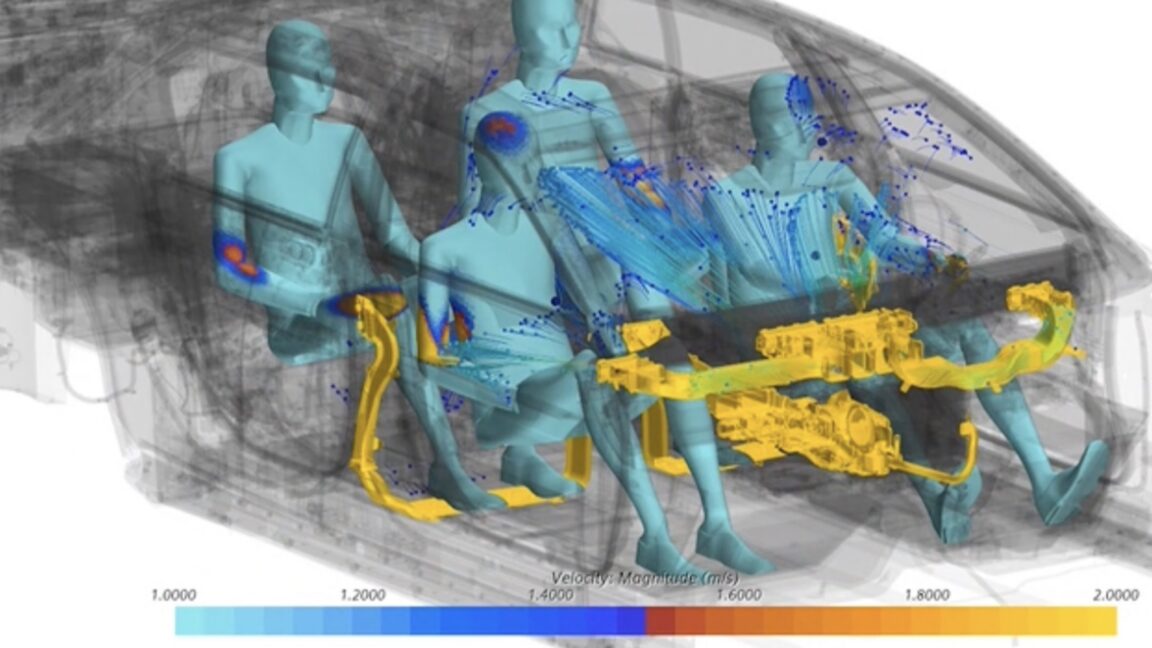
General Motors is reworking its engineering process with AI and machine learning, collapsing traditional handoffs between design, aerodynamics, structures and manufacturing into what executives call a single, probabilistic development workflow. Sterling Anderson — who left Aurora to become GM’s chief product officer just over a year ago-described the change as a new “third epoch” of engineering in which AI removes the delays and silos that previously separated functions.
Technically, GM layers machine learning on top of existing high‑fidelity simulation tools such as computational fluid dynamics (CFD) and finite element analysis (FEA). Rather than a relay race where design hands work off to aero and then to structures, the company aims to run those domains together in a unified loop so virtual environments can validate and jointly optimize hardware and embedded software.
The most tangible result GM reports is a dramatic speedup in FEA runs. Processes that historically took about 15 hours, the company says, can now complete in roughly one minute thanks to AI‑driven virtualization and parallelization. That acceleration turns overnight batch simulations into near‑instant feedback during design work, allowing engineers to evaluate many more iterations in the same calendar time.
GM says the faster virtual testing enables broader, probabilistic exploration of design spaces. By running many more scenarios quickly, teams can identify edge cases and tradeoffs without building as many physical prototypes, then validate the most promising candidates against tests. Jason Fischer, GM’s executive director quoted in reporting, emphasized the scale and speed of the effort compared with typical industry practice. Executives also say the approach is being applied beyond conventional vehicle aerodynamics and structures. GM cites use cases across motorsport, energy and batteries, defense projects and the company’s lunar program, arguing the platform lets engineers improve physical components and embedded software simultaneously rather than sequentially.
Independent industry research is beginning to back practical adoption: last month IBM and race‑car maker Dallara published work showing machine learning — enabled virtualization can produce data correlated closely enough with physical tests to be usable. For engineering teams and builders, that means shorter cycle times and fewer prototypes, but also a heavier reliance on probabilistic models that must be validated carefully against physical tests.
Sources
Replies (0)
No replies in this topic yet.
