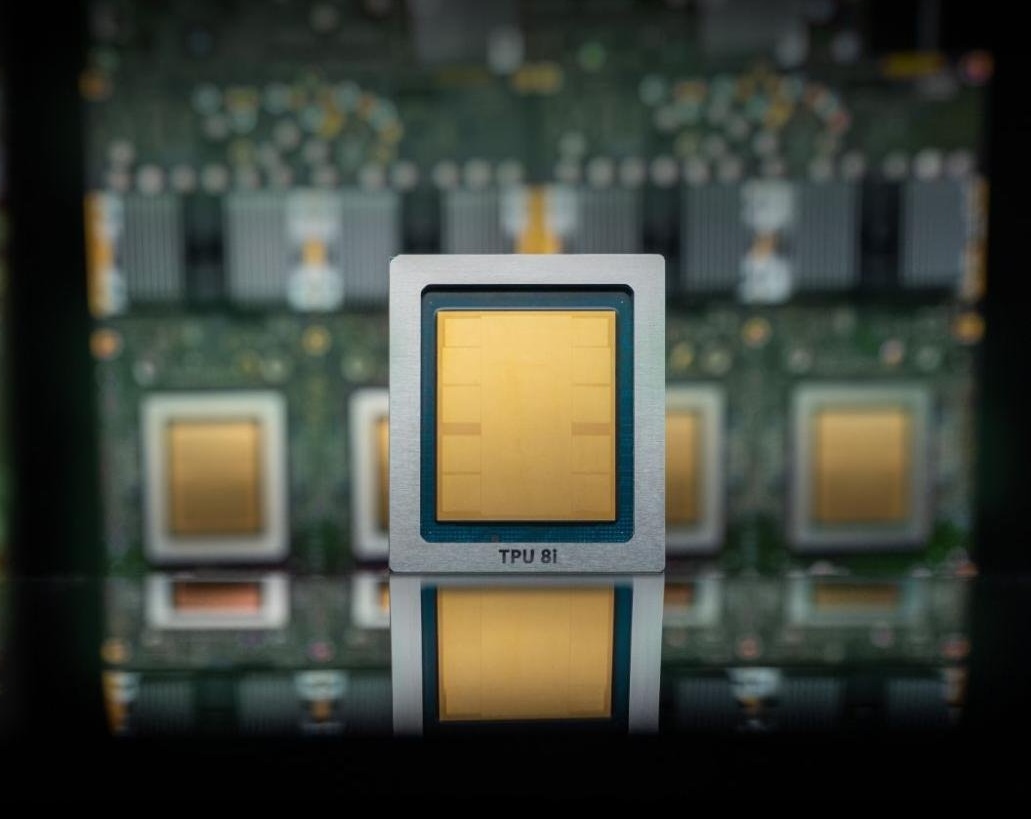
Google Cloud officially announced the release of its eighth generation of specialized tensor processing units (TPUs). The main distinguishing feature of the new hardware line is the physical and architectural separation of the flagship processors into two independent chips. The first of these, named TPU 8t, is designed specifically for the resource-intensive process of training AI models. The second chip, named TPU 8i, is focused exclusively on inference — that is, on the continuous use of algorithms and the generation of responses after user requests are submitted. This approach allows cloud infrastructure to more accurately distribute computational loads for specific client tasks.
The stated technical characteristics of the eighth-generation custom chips demonstrate a significant leap compared to previous iterations. According to the developers, the new processors provide up to a three-fold acceleration of the AI model training process. In addition to raw speed, the company emphasizes economic benefits, claiming an 80 percent improvement in performance-to-cost ratio. Furthermore, the new generation architecture supports combining over one million tensor processors into a single working cluster. As a result, corporate clients should receive significantly more computing power with reduced energy consumption and lower financial costs compared to previous hardware versions.
Despite the aggressive development of its own silicon technologies, which the company refers to by the acronym TPU in honor of the original name of low-power Tensor chips, this initiative is not a direct attempt to completely displace competitors' graphics processors. Like other cloud computing giants such as Microsoft and Amazon, Google uses its own chips to complement, rather than replace, NVIDIA-based systems in its infrastructure. Moreover, the technological giant officially promised to make its partner's latest chip, known by the codename Vera Rubin, available in its own cloud by the end of this year.
Industry experts note that, at this stage, bets against the leader in the hardware accelerator market are not justified. Reputable analyst Patrick Moorhead recalled his 2016 prediction, when Google first released its initial tensor module. At that time, he speculated that the emergence of a strong new player would be bad news for the market positions of NVIDIA and Intel. However, the test of time has shown a completely different picture: today, NVIDIA's market capitalization has reached nearly five trillion dollars. If the current plan holds, Google's further growth as a provider of cloud AI services will only bring additional orders to the graphics processor manufacturer, even with clients actively using custom chips.
Instead of direct competition, technological leaders are deepening engineering collaboration to improve the overall efficiency of data centers. Google reported joint work with NVIDIA on a deep modernization of computer networks, which will allow the partner's hardware systems to operate in the cloud environment with even greater performance. In particular, both companies focused their efforts on a software-defined networking technology called Falcon. This promising technology was originally created by Google engineers and open-sourced in 2023 under the auspices of the Open Compute Project, the largest industry organization for hardware standardization.
Sources
Replies (0)
No replies in this topic yet.
