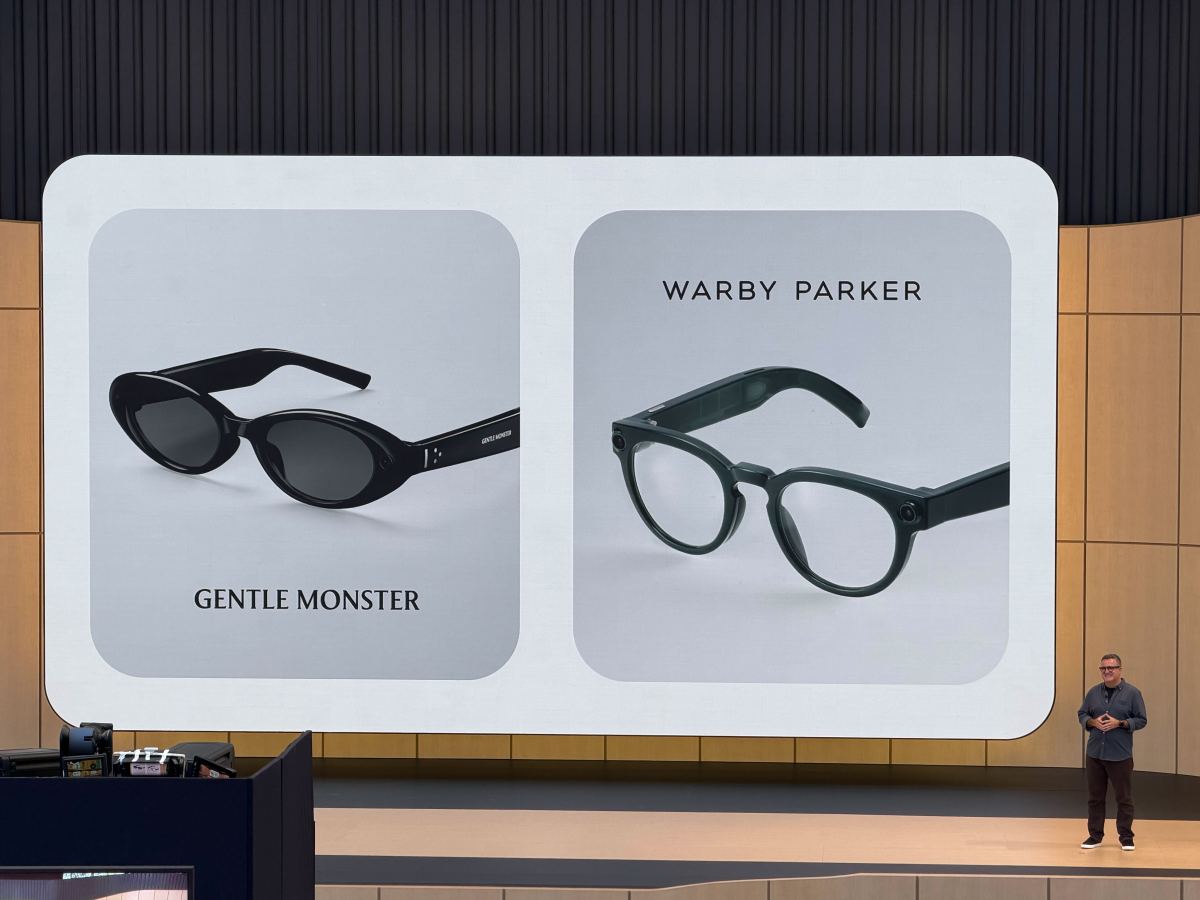
At I/O 2026 Google introduced “audio glasses,” wearable frames that accept natural spoken commands to run Google apps and services — including Gemini — and will pair with Android and iOS phones.
Google used I/O 2026 to unveil a new wearable category it calls “audio glasses”: eyeglass frames that accept natural spoken commands and execute tasks across Google’s services. The company demonstrated the interaction on stage, where a presenter spoke to the glasses to initiate an online coffee order that proceeded through a paired handset and Google’s backend. The announcement signals a push to move routine, hands — free tasks from phones to head-worn devices.
The glasses are positioned to work alongside smartphones rather than as standalone augmented — reality headsets. Google said the devices will pair with both Android and iOS handsets and emphasized deep software integration — specifically naming Gemini as a service the glasses can call upon. In demos the hardware completed multi — step workflows when connected to a phone, illustrating voice — triggered handoffs and cross — device state synchronization.
Hardware and consumer — facing design were developed with outside partners: Google said it partnered with Warby Parker and Gentle Monster to produce the new line, and that Samsung collaborated on the design. The company gave a general availability window of “later this year,” while early I/O materials focused on positioning, partners and live interactions rather than detailed technical specifications.
The announcement marks a renewed wearable push after Google’s earlier Glass experiments and arrives into a market that has matured over the last decade. Major companies and a broad set of startups have invested in head-worn devices and pursued both audio — first and mixed — reality approaches, making the landscape more crowded and more developer — focused than in the past.
For builders the product surfaces concrete integration points: voice — triggered flows tied to Google services and Gemini create needs for voice intents, cross — device state sync, hands — free authentication and payment handoffs. The live ordering demo underscored practical requirements for app backends, pairing protocols and ephemeral voice — UX design and testing if developers want to support the glasses when they reach consumers.
Sources
Replies (0)
No replies in this topic yet.
