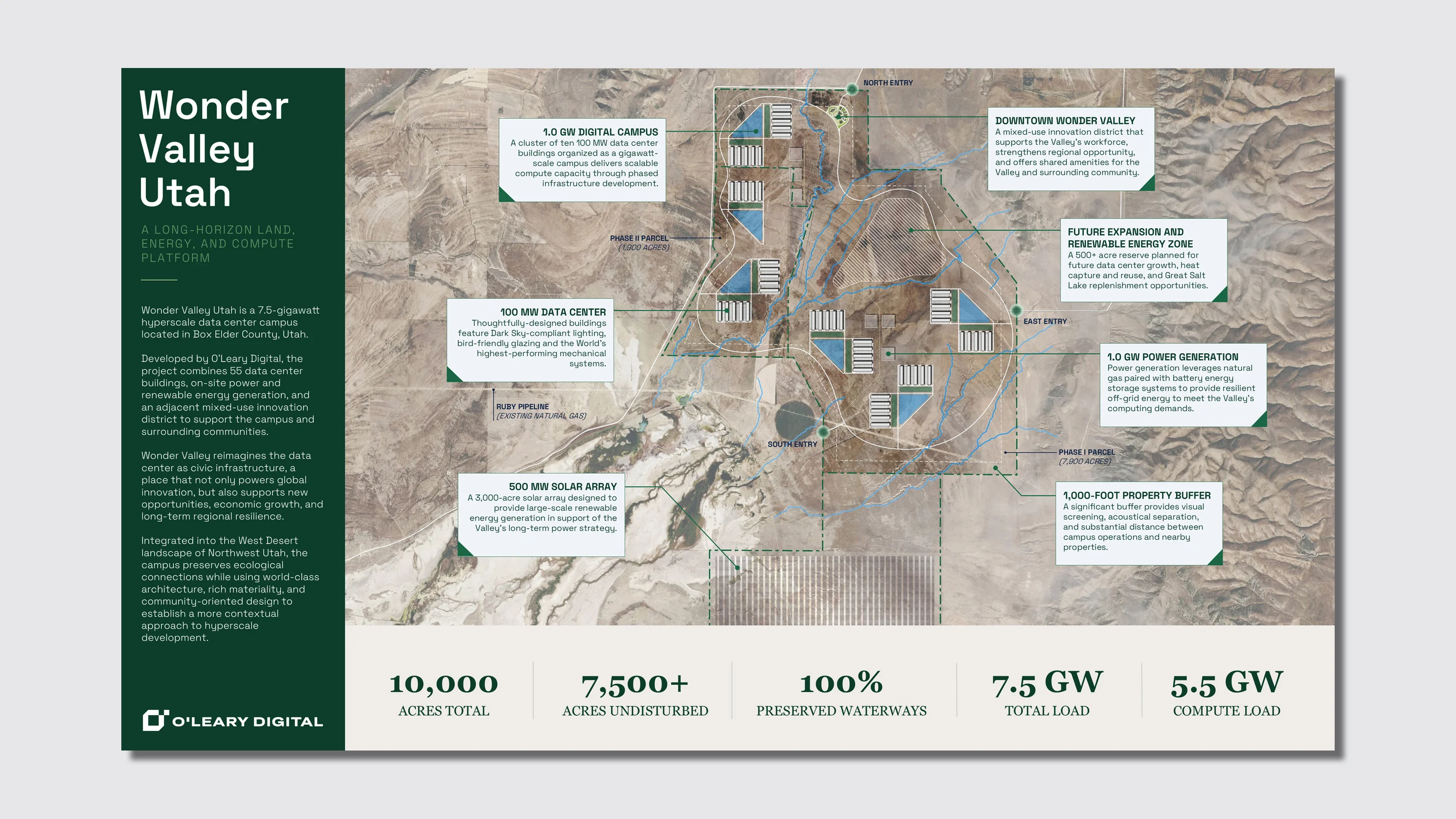
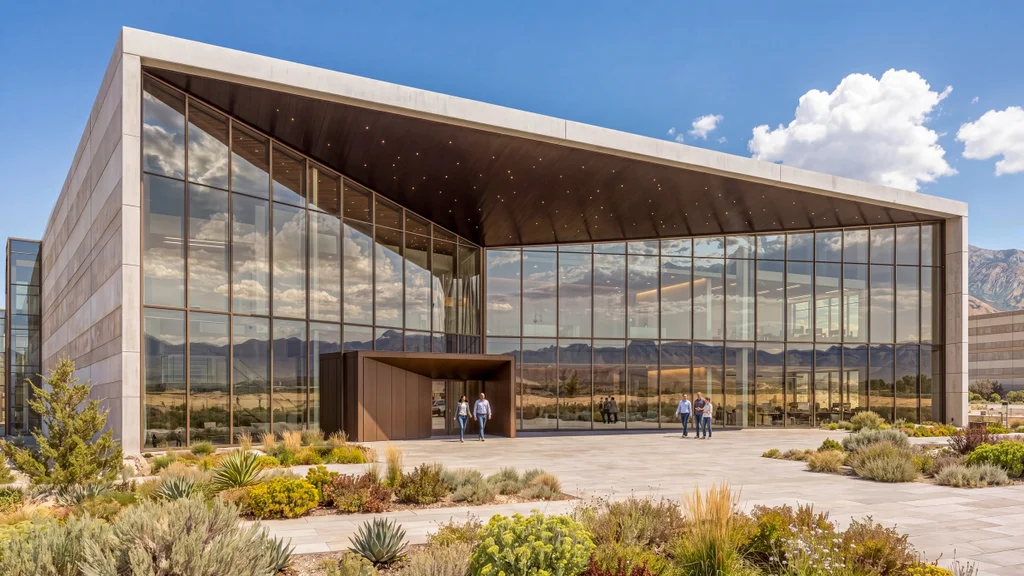
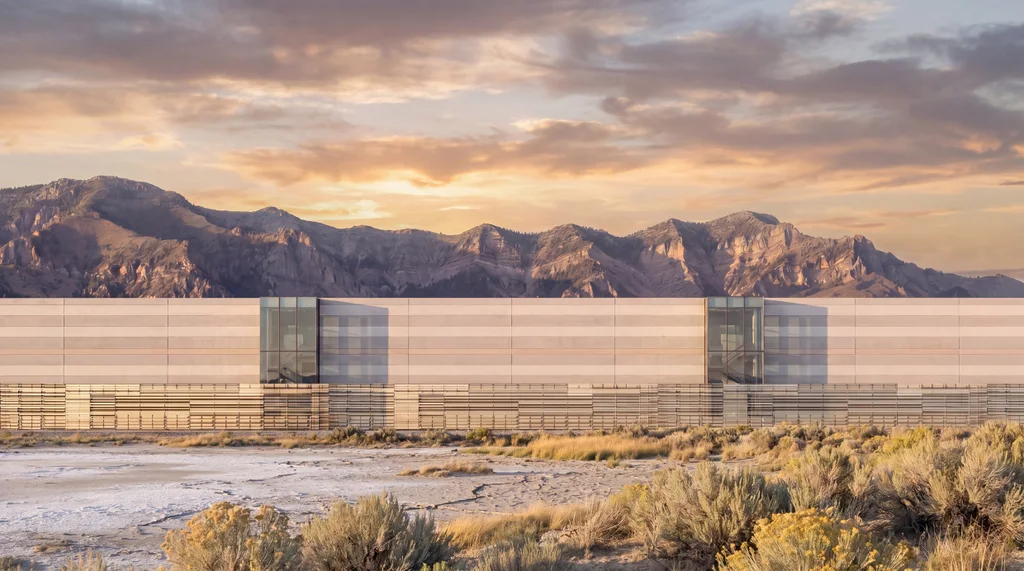
Kevin O’Leary’s development company has formally proposed Stratos, a 7.5‑gigawatt data‑center campus sited on 10,000 acres of cattle‑grazing land north of the Great Salt Lake. The Box Elder County Commission granted initial approval for the project on May 4, 2026, touching off local opposition and debate over whether a build at this scale could reshape regional infrastructure and environmental dynamics. If completed as described, Stratos would dwarf existing artificial‑intelligence infrastructure and could rank among the largest data‑center builds on record.
The planned site lies in Box Elder County near Snowville, Utah. Public filings describe the development as a 10,000‑acre data center nested inside a broader 40,000‑acre property; reporting accompanying those filings includes photographs of cattle grazing on parcels that would be developed, underscoring the largely rural character of the land targeted for conversion. The juxtaposition of working grazing land and a proposed hyperscale campus has sharpened local concern about land‑use change.
O’Leary, the developer and real‑estate investor who is also widely known as a longtime television personality, frames Stratos as a competitive and economic response to surging demand for AI infrastructure. He has cited hyperscale interest from companies including OpenAI, Anthropic, Amazon, Google, Meta, and Microsoft as part of his rationale and said, 'They're all going to be built like this because the economics are so brutal, you need scale.' His pitch centers on the idea that only very large campuses can meet the density and cost requirements of modern AI compute.
Residents and environmental observers have highlighted specific resource risks tied to a project of this magnitude: very high energy consumption, substantial land‑use conversion, and the possibility of drawing down water connected to the Great Salt Lake. O’Leary and his company, O’Leary Digital, have pushed back on those concerns, saying the campus would include its own on‑site energy generation, rely on closed‑loop cooling systems, and would not draw water from the lake or depend on power from Utah’s grid.
O’Leary has also disputed descriptions that imply a 40,000‑acre data center, saying, 'We're not building a 40,000‑acre data center… That’s all fiction.' The commission’s initial approval did not settle the dispute; instead it intensified scrutiny over how very large data centers are sited and resourced. For developers, planners and regulators, Stratos crystallizes concrete rollout questions — scale of land acquisition, choices in cooling architecture, the degree and design of on‑site power generation, and precise water‑use modeling — that will shape permitting battles and community responses if similarly large AI‑oriented campuses are proposed elsewhere.
Sources
Replies (0)
No replies in this topic yet.
