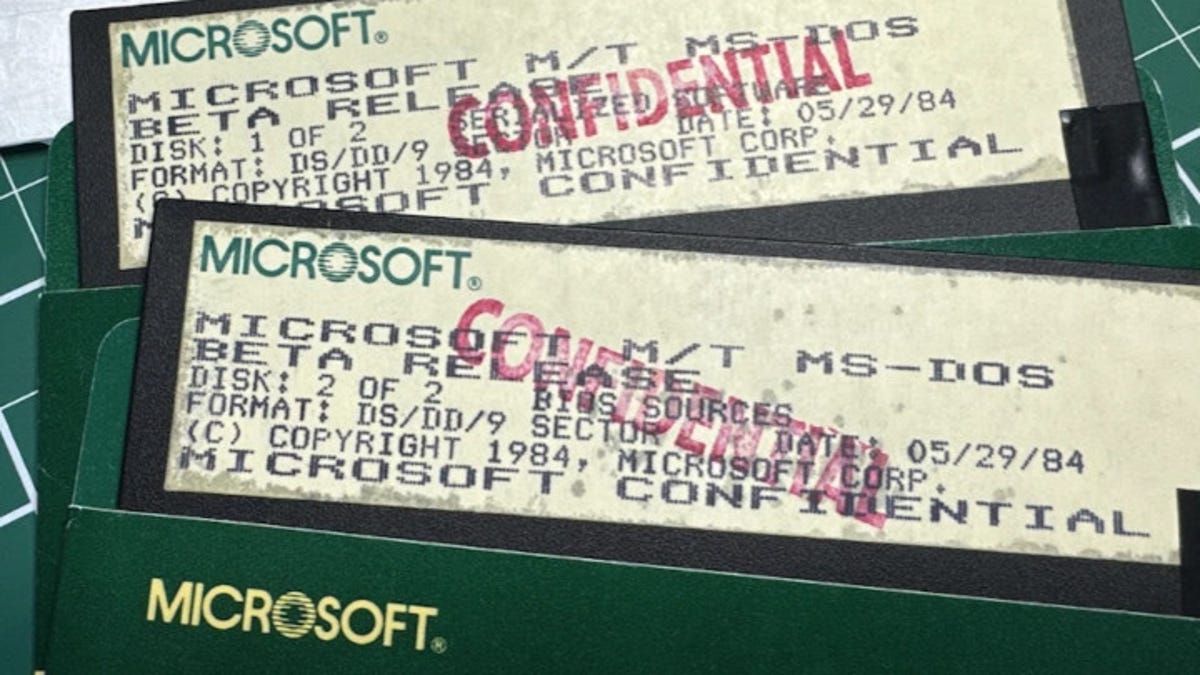
Microsoft has significantly contributed to computing history by open-sourcing PC — DOS 1.00, the operating system that powered the very first IBM Personal Computer. Announced on April 28, 2026, this release provides the complete source code and accompanying notes for the system that initiated a technological revolution. This move offers a rare and detailed insight into the earliest days of PC operating system development, providing a historical artifact for the modern computing community.
The journey to PC — DOS 1.00 began when Microsoft, then known as "Micro Soft" and primarily recognized for Bill Gates' BASIC interpreters, received a pivotal opportunity. In 1980, IBM approached Microsoft for an operating system for its forthcoming IBM PC. Lacking time to develop an entirely new OS and unable to port its Unix-based Xenix due to licensing restrictions with AT&T, Microsoft quickly acquired 86 — DOS, also known as QDOS, from Seattle Computer Products and its inventor, Tim Patterson, for just under $100,000. This strategic acquisition proved to be a pivotal moment for the company's future.
IBM had initially sought a CP/M-like operating system, but negotiations with Digital Research, the owner of CP/M, faltered. Consequently, Big Blue turned to Microsoft. Microsoft adapted the purchased 86 — DOS, which already featured CP/M-style application programming interfaces (APIs), into what IBM would ship as PC — DOS 1.0 in August 1981. Crucially, Microsoft retained the right to sell this operating system independently as MS — DOS to other PC-compatible manufacturers, a decision that would lay the groundwork for its eventual dominance in the personal computing market. Despite its groundbreaking role, PC — DOS 1.
This latest release continues a trend of Microsoft embracing open source for its historical software. Previously, the earliest widely accessible DOS sources were MS — DOS 1.25 and 2.0, initially published through the Computer History Museum in 2014 and then republished on GitHub in 2018. These, along with a later publication of the joint Microsoft — IBM MS — DOS 4.00 sources, signaled a growing comfort within Microsoft to treat its once-proprietary DOS code as an educational resource. The initial 2014 release came with a tightly constrained license, permitting only non-commercial research and educational use while explicitly forbidding reuse in other projects.
The significance of making PC — DOS 1.00 fully open and permissively licensed is substantial for the AI and broader developer community. The code is now accessible as a browsable Git tree, empowering systems programmers, educators, and retrocomputing enthusiasts to clone, build, and experiment with it using contemporary toolchains. Beyond the source code itself, Microsoft has also shared invaluable historical materials, including Tim Patterson’s hand-written notes and point — in-time working states. These are likened to a "printed commit history of a Git repository," offering unique insights into the development process of the era.
Sources
Replies (0)
No replies in this topic yet.
