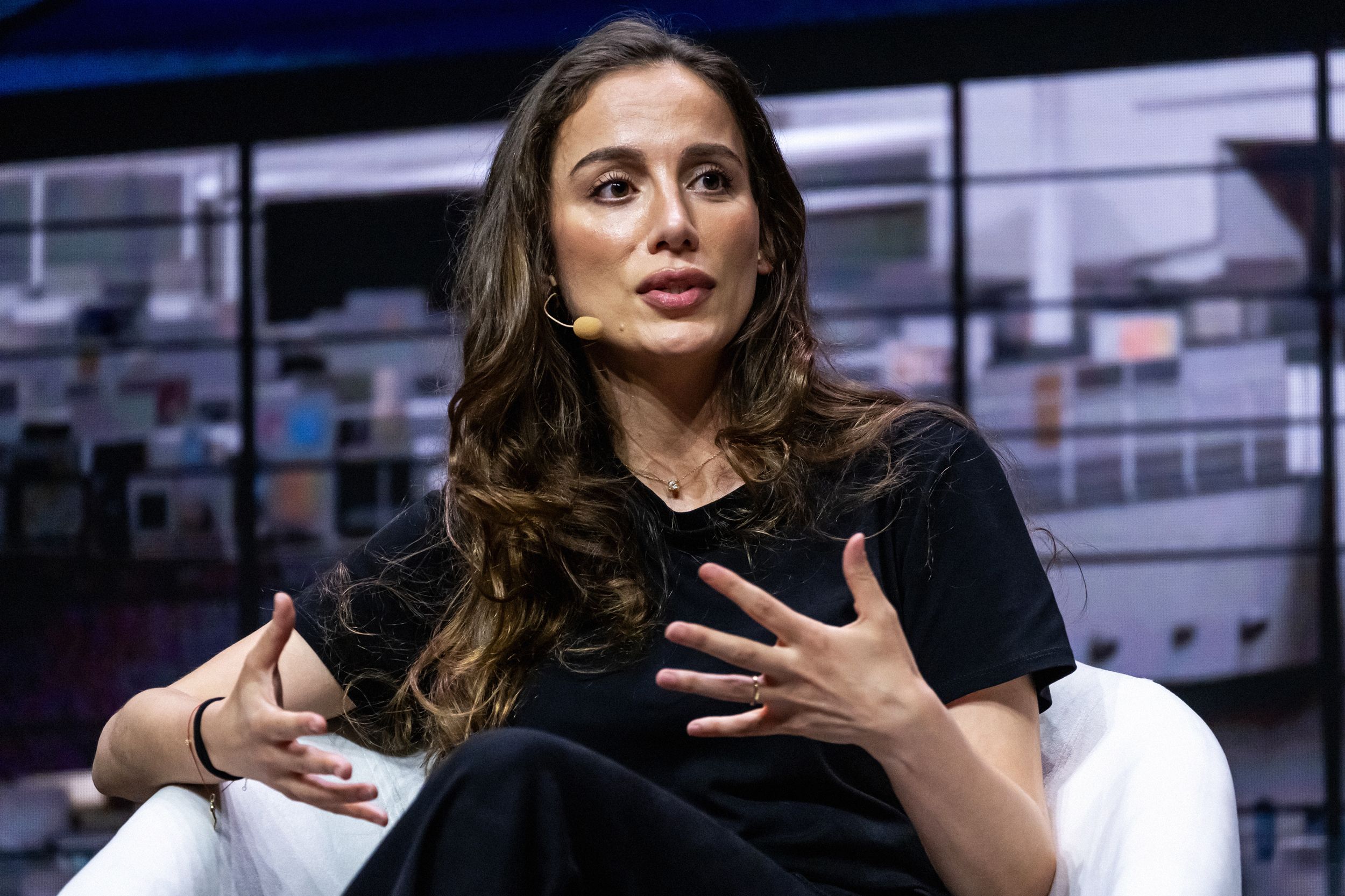
Mira Murati, who co‑founded Thinking Machines Lab after leaving her post as OpenAI chief technology officer in 2024, unveiled a preview of a new class of artificial intelligence the company calls “interaction models.” The preview positions these models as a deliberate attempt to keep humans engaged in the loop of advanced AI systems rather than to replace human judgment, arguing that collaboration should remain central even as capabilities advance. If realized, the approach could shift how people interact with frontier models by prioritizing continuous human signals over isolated text prompts.
Thinking Machines says the interaction models are trained to communicate through camera and microphone inputs instead of relying only on a turn‑based text pipeline. The lab demonstrated systems that natively interpret continuous, messy human signals — pauses, interruptions and tonal shifts — and that can adapt on the fly when a person clarifies or changes direction. The company published demonstration videos to illustrate those behaviors, but the interaction models shown in the previews have not been released for public use and remain under development.
The company frames this work in contrast to the prevailing trajectory at major AI labs, where large language and multimodal models increasingly perform complex tasks from text prompts with minimal human intervention. Thinking Machines explicitly positions its interaction models as an alternative to those automation‑first designs. The preview also aligns with proposals from some startups and economists that advocate for AI architectures emphasizing human empowerment and collaboration rather than full automation; the company singled out peers such as Humans& as part of that broader conversation.
For developers and product teams, Thinking Machines promises a different interaction paradigm: systems that perceive ongoing context and respond continuously instead of treating each utterance as an isolated prompt. Alexander Kirillov, a founding team member and multimodal expert at Thinking Machines, says the models “constantly perceive what you’re doing” and can reply, search for information, or invoke tools in a way that current conversational models do not. That capability is intended to make assistance feel more like adaptive collaboration and less like a sequence of discrete requests.
On product rollout, Thinking Machines has released one commercial offering so far: Tinker, an API launched in October 2025 that lets researchers and engineers refine frontier models with custom data and focuses on fine‑tuning open‑source models. The interaction models previewed have not been commercialized, and the company describes the demonstrations as an initial step toward amplifying people’s preferences and intent rather than substituting for them. Murati and her team emphasize customization — enabling users to build and adapt frontier models — and argue this path could preserve human judgment and values as systems scale.
Sources
Replies (0)
No replies in this topic yet.
