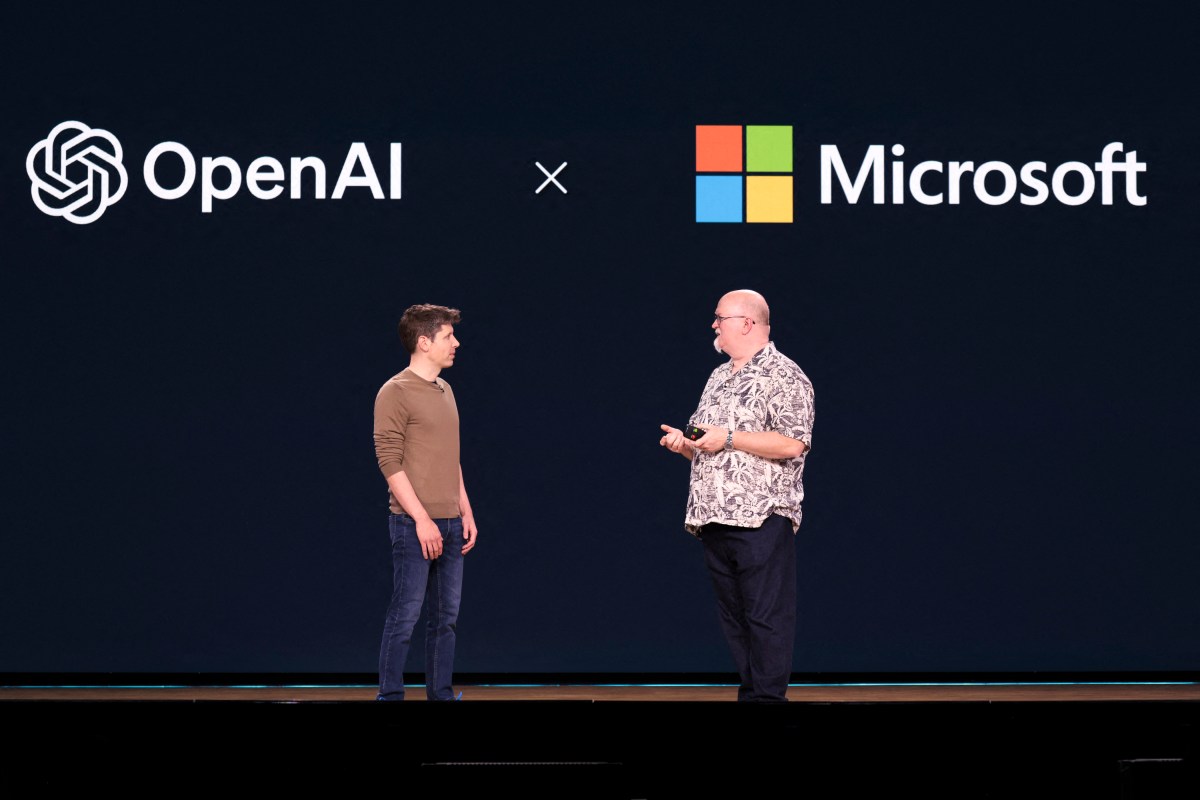
Microsoft CEO Satya Nadella has publicly affirmed the company's intention to "exploit" its revised partnership with OpenAI, directly addressing concerns about the future of their collaboration. Nadella emphasized the "win-win construct" vital for sustained partnerships, stating, "We feel good about our partnership with OpenAI. I’m always very focused on any partnership and ensuring that there’s a win-win construct at all times. I mean, that’s how you can remain good partners." The updated agreement grants Microsoft royalty — free access to OpenAI's advanced intellectual property, including its frontier models and agent products, a privilege extended through 2032.
Nadella's pronouncement serves as a direct response to earlier industry speculation suggesting Microsoft might cede its competitive advantage in AI. Prior to the revised terms, some observers theorized that Microsoft, by losing exclusive access to OpenAI's technology, could struggle to maintain its leading position. This speculation gained traction following OpenAI's immediate announcement of an exclusive AI product deal with Amazon, Microsoft's primary cloud rival, a collaboration further highlighted by interviews featuring OpenAI CEO Sam Altman and AWS CEO Mark Garman. Despite these competitive developments and the "ink spilled" over potential setbacks, Nadella publicly shrugged off these concerns, expressing confidence in Microsoft's strategic positioning.
The confidence from Microsoft's leadership is underpinned by the robust performance of its AI business. The company recently reported its AI segment had surpassed an impressive annual revenue run rate of $37 billion. This figure represents a significant 123% year-over-year increase, reflecting strong market traction for Microsoft's AI offerings. These results were reported for the last full quarter operating under the terms of the previous OpenAI agreement, indicating that Microsoft's strategic investments in AI were already yielding substantial returns before the full impact of the newly revised partnership.
Beyond the direct benefits of IP access, Nadella also elaborated on the broader, multifaceted financial relationship Microsoft maintains with OpenAI. He underscored that Microsoft generates substantial revenue from OpenAI not only as a customer utilizing Microsoft's AI accelerator infrastructure but also for "all the other compute sides" of its cloud services. This symbiotic relationship includes OpenAI's commitment to purchase more than $250 billion worth of Microsoft's cloud services, solidifying its position as a major customer. Furthermore, Microsoft holds a significant 27% equity stake in OpenAI, providing another layer of financial interest and alignment between the two entities.
Nadella also offered a broader market perspective, asserting that the landscape for enterprise AI adoption is evolving, with many companies increasingly preferring to leverage multiple AI models. He suggested that OpenAI's relative importance within the industry, particularly for enterprise clients, is no longer as singularly dominant as it once was. Microsoft positions itself to meet this diversified demand by offering "the broadest selection of models of any hyperscaler," allowing customers to choose the optimal model for specific workloads from a diverse range including OpenAI, Anthropic, and various open-source options. This approach is evidenced by Nadella's claim that over 10,000 customers have already utilized more than one model through Microsoft's platform.
Sources
Replies (0)
No replies in this topic yet.
