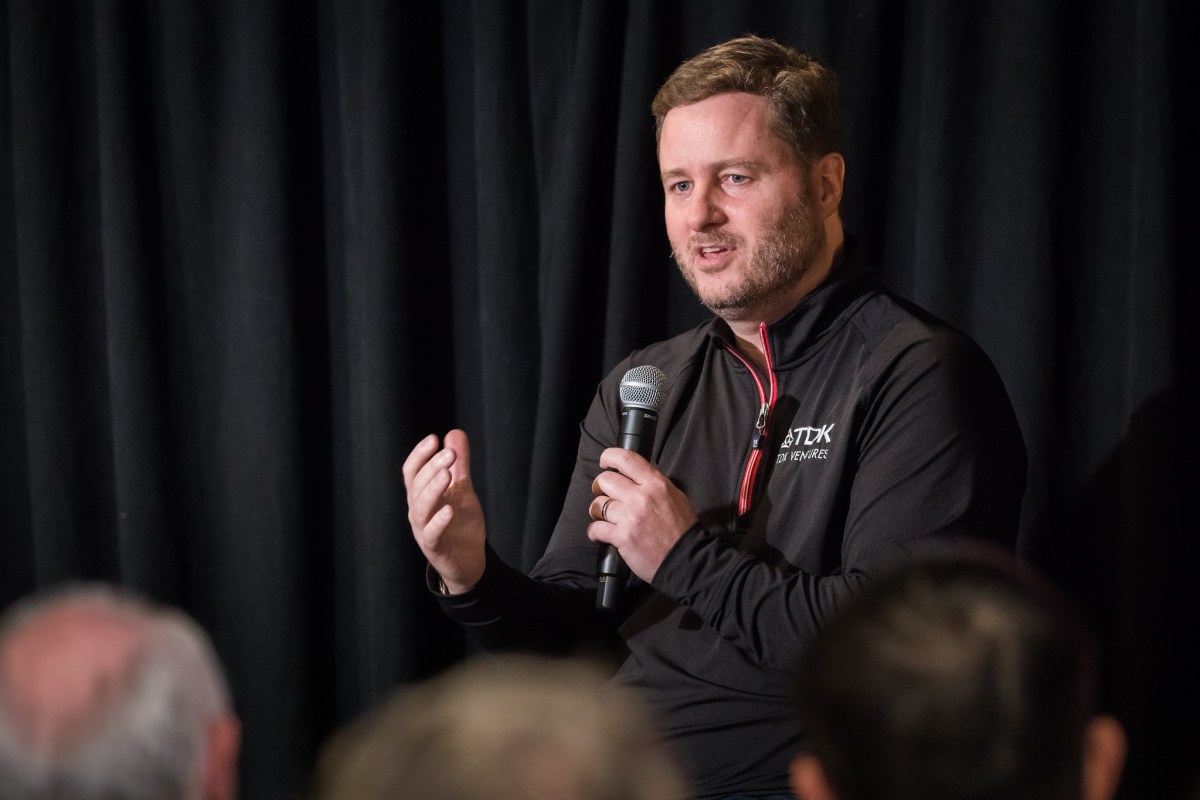
Nicolas Sauvage told a StrictlyVC San Francisco audience last week that he runs TDK Ventures with a simple rule: The best tech bets take roughly four years to look obvious. He established TDK’s corporate venture arm in 2019, and the firm now manages $500 million across four funds, scouting technologies that fit the Japanese conglomerate’s manufacturing strengths and strategic constraints. That horizon shapes where the fund allocates capital and which industrial bottlenecks it targets.
An early illustration is Groq, into which Sauvage invested in 2020, before the generative‑AI boom. Groq-founded by Jonathan Ross, an engineer who helped build Google’s TPUs-was designed from the start around inference. Ross developed the chip by building the compiler first and paring the architecture until, Sauvage says, “you can’t remove one part and have it still work.” The company was valued at $6.9 billion in its most recent funding round last fall.
Sauvage emphasizes a technical distinction: inference is the repeated computational work each time a model answers a query, and its demand compounds as models are embedded across applications. He told the audience inference demand “exploded this year” as AI agents began planning and acting across dozens of calls rather than answering single queries, creating sustained load that favors specialized hardware and software optimization.
TDK Ventures’ portfolio reflects that bottleneck‑first discipline. It includes startups building solid‑state grid transformers and sodium‑ion batteries tailored for data centers, alongside alternative battery chemistries aimed at sidestepping the geopolitical fragility of lithium and cobalt supply chains. Those energy and grid plays are meant to align with TDK’s industrial footprint and the near‑term needs of large equipment customers.
On robotics, Sauvage is prioritizing narrow, physical AI use cases with clear industrial fit. The fund has backed Agility Robotics for repetitive warehouse movement and ANYbotics for rugged, hazardous environments where the job is essentially to “go where people can’t.” The emphasis is on task‑specific machines that replace or augment defined manual operations rather than on general‑purpose humanoid ambitions.
Sauvage traces the fund’s origin to two Stanford lectures — one about corporate VC and another on why it fails — after which he pitched a fund to TDK’s Tokyo headquarters despite lacking obvious standing: he is French, joined TDK in Silicon Valley via an acquisition, doesn’t speak Japanese and does not live in Tokyo. After initial resistance he secured approval by framing the mandate as a corporate strategic question: “What’s the next big thing for TDK, and what might kill it?
For founders, the practical implication is clear: TDK Ventures looks for teams that focus on defined bottlenecks, deliver clear product purpose and demonstrate near‑term industrial fit. The portfolio’s mix-inference‑optimized silicon, alternative energy storage and task‑specific robots — signals where this corporate VC sees durable demand and strategic asymmetry for a hardware‑centric industrial group like TDK.
Sources
Replies (0)
No replies in this topic yet.
