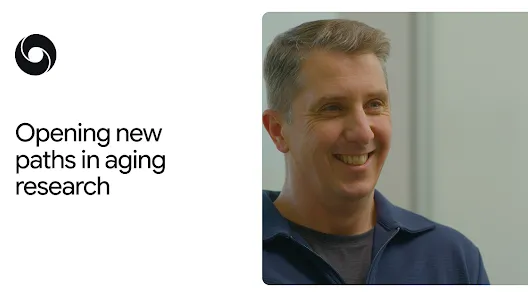
Calico Life Sciences reported that it used DeepMind’s multi‑agent research partner, Co‑Scientist, to turn scattered findings in aging biology into a concrete, testable hypothesis: that the integrated stress response (ISR) is regulated by metabolic changes. On May 19, 2026, Calico’s head of AI/ML Matt Onsum and principal scientist Dr Katherine Labbé described how the system helped them move from a web of inconsistent results to a focused experimental lead — a step they say matters because it can speed discovery in a field hampered by non‑replicated studies.
The team presented Co‑Scientist as a tool that can cut through mixed‑quality literature and surface plausible mechanisms worth testing. According to Calico, the system did more than suggest the ISR-metabolism connection: researchers used it interactively to iterate experimental designs and to fold new laboratory data back into ongoing model reasoning, creating a loop between hypothesis generation and empirical follow‑up.
Calico framed the finding as practically meaningful: experiments informed by Co‑Scientist produced new results that bear on how sustained ISR activation relates to health and disease, and the company says those results are substantial enough that the team intends to publish them. That decision implies the AI’s outputs were actionable in real lab workflows rather than merely speculative leads.
Researchers emphasized collaboration over replacement. Dr Katherine Labbé said Co‑Scientist “thinks like a scientist,” arguing that the system fit naturally with how scientists frame and test questions. Matt Onsum described the tool as enabling the integration of scattered information — an approach he characterized as a significant moonshot for aging research — and underscored that human oversight and domain expertise remained central to interpreting and validating the AI’s suggestions.
The broader DeepMind post outlining Co‑Scientist’s May 2026 use cases points to other applications where similar tooling might accelerate discovery: repurposing medicines for liver fibrosis, approaches to ALS, discovering liver disease mechanisms, identifying new infectious disease targets, and speeding genetic lead development. Calico’s account highlights two capabilities builders should prioritize in similar systems: robust assessment and weighting of conflicting literature, and an interactive loop that cycles hypotheses, experiment plans, and incoming results back into the model. The company’s experience suggests those features can produce publishable hypotheses and win adoption from domain experts.
Sources
Replies (0)
No replies in this topic yet.
