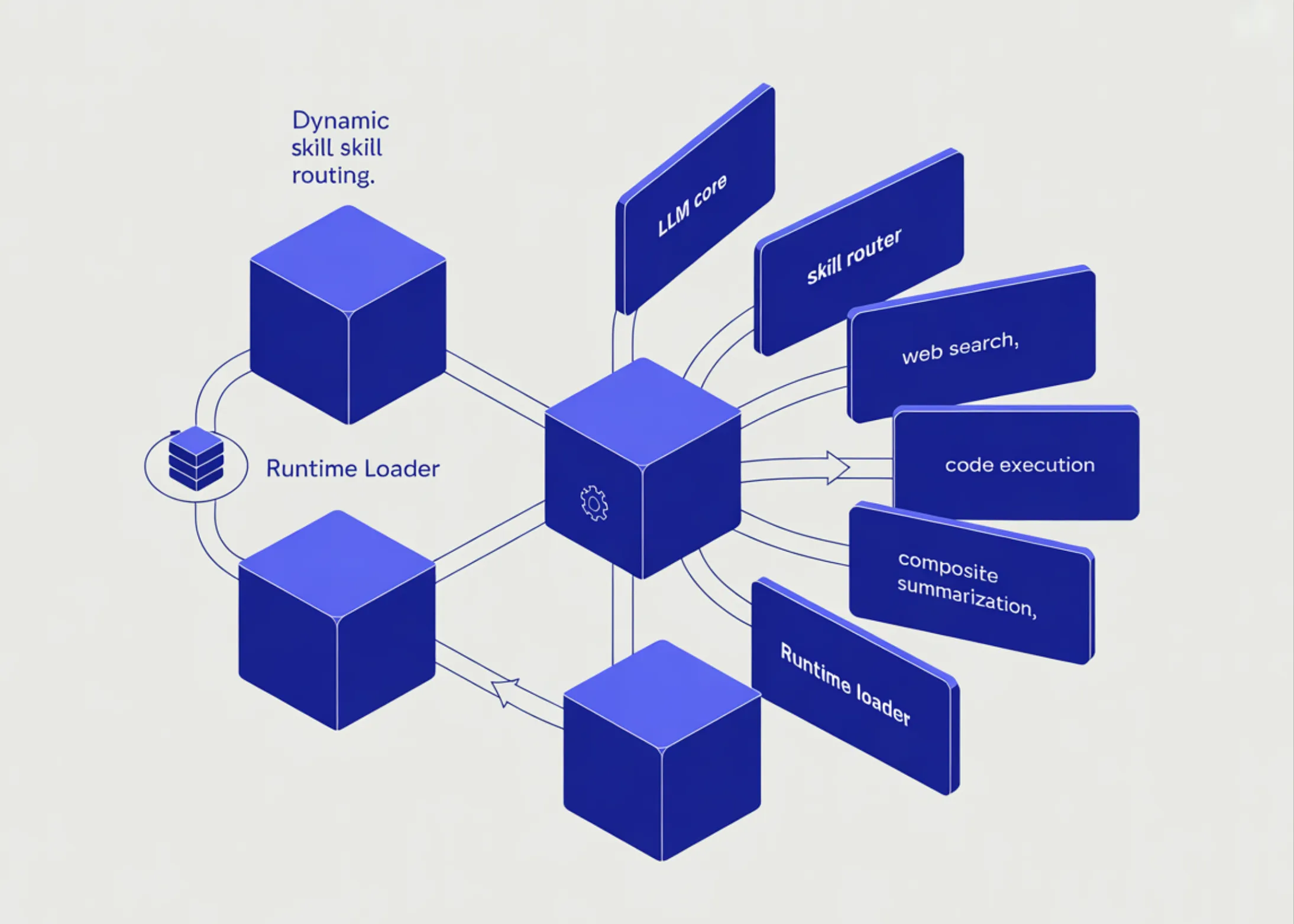
A step-by-step Python tutorial published May 5, 2026 shows how to implement a modular, skill — based agent framework for large language models using runnable OpenAI client examples, dynamic tool routing, observability, and runtime hot-loading.
A hands — on tutorial published May 5, 2026 walks developers through implementing a modular agent framework that breaks agent capabilities into reusable skills. The article provides runnable Python examples and setup guidance so readers can reproduce the architecture and experiment with skill composition and runtime extension. The sample code uses the OpenAI Python client (example shows model "gpt-4o-mini"), reads an OPENAI_API_KEY from the environment or prompts for it with getpass, and alerts users to missing dependencies with a "pip install openai pydantic rich" message.
At the framework level the tutorial frames capabilities like an operating system for agents: a central registry holds SkillMetadata and SkillCategory entries and enforces schemas, while a Skill abstract base class defines how individual skills behave. Agents discover, select and compose skills through tool calling and multi — step reasoning, and new capabilities can be hot-loaded at runtime so orchestration can evolve without restarting the system.
Observability and telemetry are built into the examples so orchestration decisions and performance can be traced: the code records call counts and latency for skill invocations, and includes an explicit cost_estimate field (the sample defaults it to 0.001) that supports monitoring and budgeting. These hooks let developers track end-to-end behavior and diagnose routing or performance issues during development and testing.
The tutorial highlights practical trade — offs for developers building LLM-driven applications: modular skills improve reuse and testability and make it easier to iterate on individual pieces, while dynamic routing enables more complex, composable workflows. The sample is presented as a starting point rather than a production — ready framework, with observability and runtime extensibility offered as key areas to extend and harden for real-world deployments.
Sources
Replies (0)
No replies in this topic yet.
