Scout AI, a defense technology company founded in 2024 by Colby Adcock and Collin Otis, has successfully raised $100 million in a Series A funding round. This significant investment, led by Align Ventures and Draper Associates, follows an earlier $15 million seed round secured in January 2025. The company positions itself as a "frontier lab for defense," aiming to push the boundaries of artificial intelligence in military applications. This latest capital infusion is intended to accelerate the development and deployment of its advanced AI models designed for complex operational environments.
At the core of Scout AI's offerings is its AI model, dubbed "Fury," which is being developed to operate and command a range of military assets. Initially focusing on logistical support, the model's capabilities are being expanded to include autonomous weapon systems. CTO Collin Otis draws a parallel between the training of these AI models and the training of human soldiers, stating that just as soldiers begin with a base level of intelligence, their AI models build upon existing large language models (LLMs). The objective is to transform a broadly intelligent AI into an "incredible military AGI" capable of sophisticated decision — making in conflict zones.
Scout AI is leveraging a newer autonomy technology known as Vision Language Action (VLA) models, which are based on LLMs and are specifically engineered for robotic control. These VLA models, first introduced by Google DeepMind in 2023, have also been instrumental in seeding other robotics startups, including Physical Intelligence and Figure.AI, the latter co-founded by Colby Adcock's brother, Brett Adcock. Colby Adcock, who serves on Figure.AI's board, recognized the opportunity to apply broader intelligence to the military's growing fleet of autonomous vehicles.
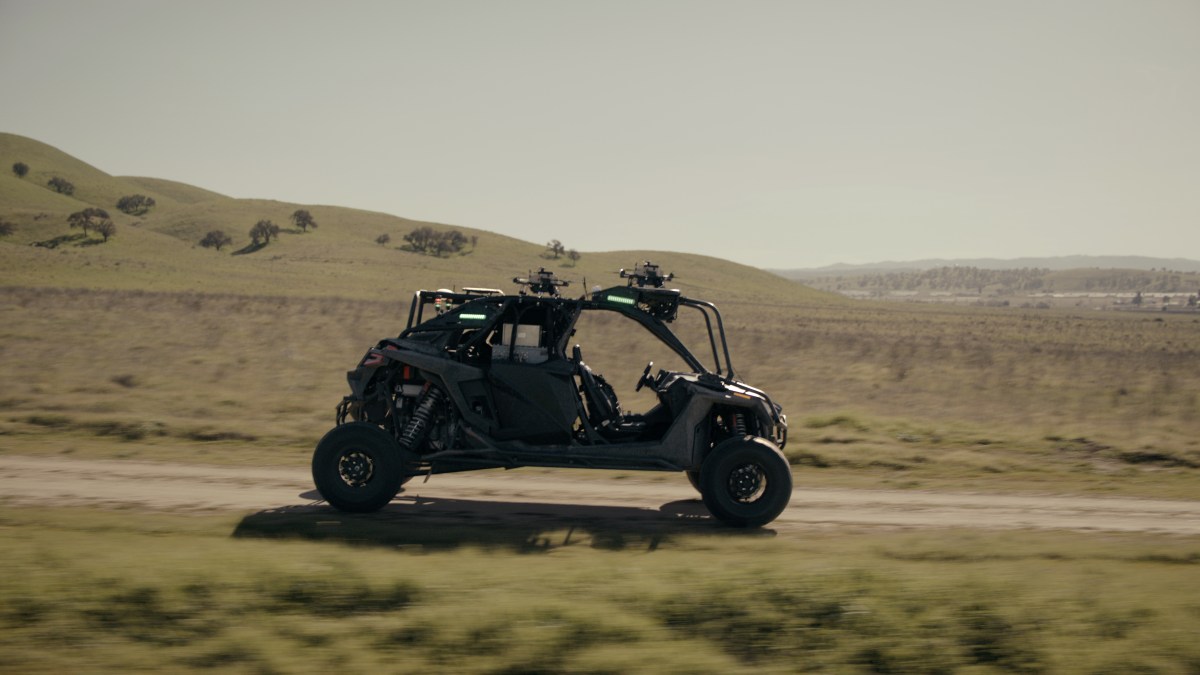
The practical training for Scout AI's Fury model takes place at an unnamed U.S. military base in central California, where four-seater all-terrain vehicles (ATVs) navigate challenging hillside trails. These aren't merely driver training exercises for humans; rather, they are dedicated efforts to train the AI models to operate effectively in potential conflict zones. The company's operations team, composed largely of former soldiers, rigorously puts these vehicles through simulated missions across diverse and difficult terrain, including steep hills, loose sand on turns, disappearing tracks, and confusing intersections.
Beyond its internal testing, Scout AI has already secured significant military technology development contracts, totaling $11 million, from key organizations such as DARPA, the Army Applications Laboratory, and various other Department of Defense customers. The company's technology is also playing a role in live military training. It stands as one of 20 autonomy providers whose innovations are being utilized by the U.S. Army’s 1st Cavalry Division during its regular training cycle at Fort Hood, Texas. This integration is part of a broader initiative, with the explicit expectation that the unit will incorporate and deploy products that demonstrate their effectiveness when it next deploys in 2027.
The development of autonomous systems for military use presents distinct and complex challenges compared to their civilian counterparts. While autonomous cars are increasingly common in structured urban environments with well-defined rules, military operations often demand capabilities in unpredictable, unstructured, and off-road conditions. Collin Otis specifically noted that systems he previously worked on for autonomous trucking were not intelligent enough to handle the exigencies of a war zone. This inherent unpredictability underscores the necessity for highly adaptable and generally intelligent AI models like Fury, capable of learning and responding to dynamic and dangerous scenarios.
Sources
Replies (0)
No replies in this topic yet.
