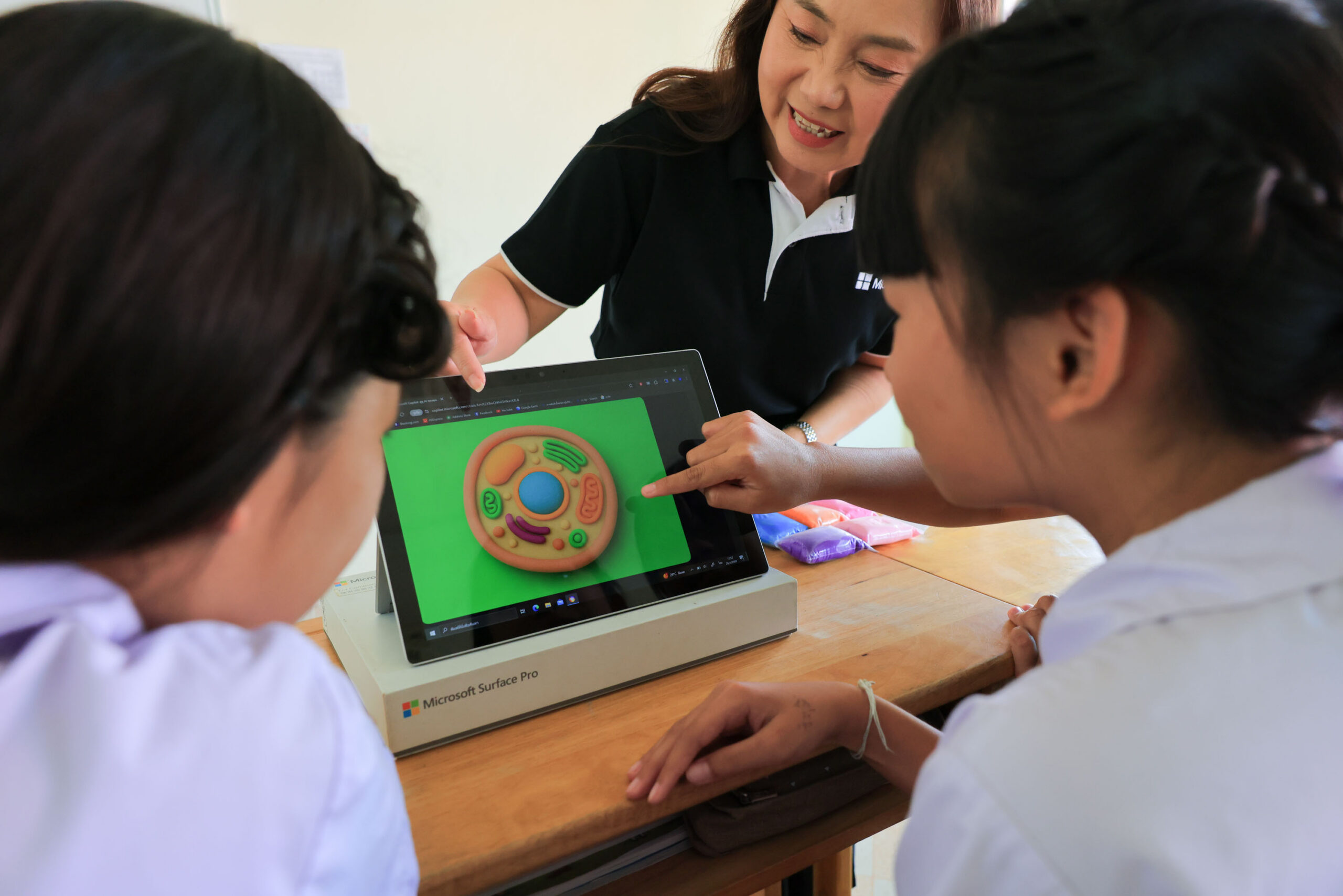
Thai schools are rolling out Microsoft AI features and a national educator — training drive that aims to certify more than 150,000 teachers this year; early reports and a Microsoft survey find increased student engagement and time savings for teachers.
Schools across Thailand are increasing classroom use of Microsoft AI tools while a coordinated training push aims to certify more than 150,000 educators this year-changes school leaders say are raising student engagement and saving teacher time. The rollout combines school — level adoption with government partnerships and a national professional development program, putting AI tools into everyday teaching and learning.
Wattana Wittaya Academy has joined the Microsoft Showcase School program as part of Microsoft Elevate for Educators, giving staff access to sustained professional development, practical resources and a global community for integrating AI into instruction. Teachers at the school described high energy and excitement when students first used Microsoft Immersive Reader; school manager Lantip Dvadasin framed the move as a strategic step to build digital fluency and adaptability among both teachers and students.
The Elevate effort is being delivered through public — private partnerships with Thai agencies — the Ministry of Education’s Office of the Basic Education Commission (OBEC), the Office of the Vocational Education Commission (OVEC), the Institute for the Promotion of Teaching Science and Technology (IPST) and the Electronic Transactions Development Agency (ETDA). Together they are coordinating training and certification across primary, secondary and vocational levels this year.
Independent metrics from Microsoft Thailand’s AI Impact Survey, run through the AI for Teachers Program, provide rollout context: of 1,414 educators surveyed, 67.2% (950 teachers) reported already using AI in the classroom. Participating teachers said they save an average of four hours per week — a cumulative time saving Microsoft equates to the annual work of about 95 full‑time teachers — and 76.3% of respondents reported measurable gains in student engagement.
Teachers report practical classroom changes after adopting AI: generating engaging lesson plans, producing dynamic worksheets and designing interactive activities faster than before. One instructor noted, “What once took hours can now be completed in minutes.” Schools also say students are using AI tools to brainstorm and summarize more effectively, with observed improvements in exam performance and quality of work; Dhammajarinee Wittaya School in Ratchaburi is cited alongside Wattana Wittaya as an example of adoption.
For edtech builders and implementers the rollout highlights clear priorities: invest in teacher training and formal credentials, embed tools such as Immersive Reader into everyday workflows, and design for responsible AI use-including safety measures, digital resilience and effective prompt design — to support scalable adoption and measurable learning outcomes across diverse school settings.
Sources
Replies (0)
No replies in this topic yet.
