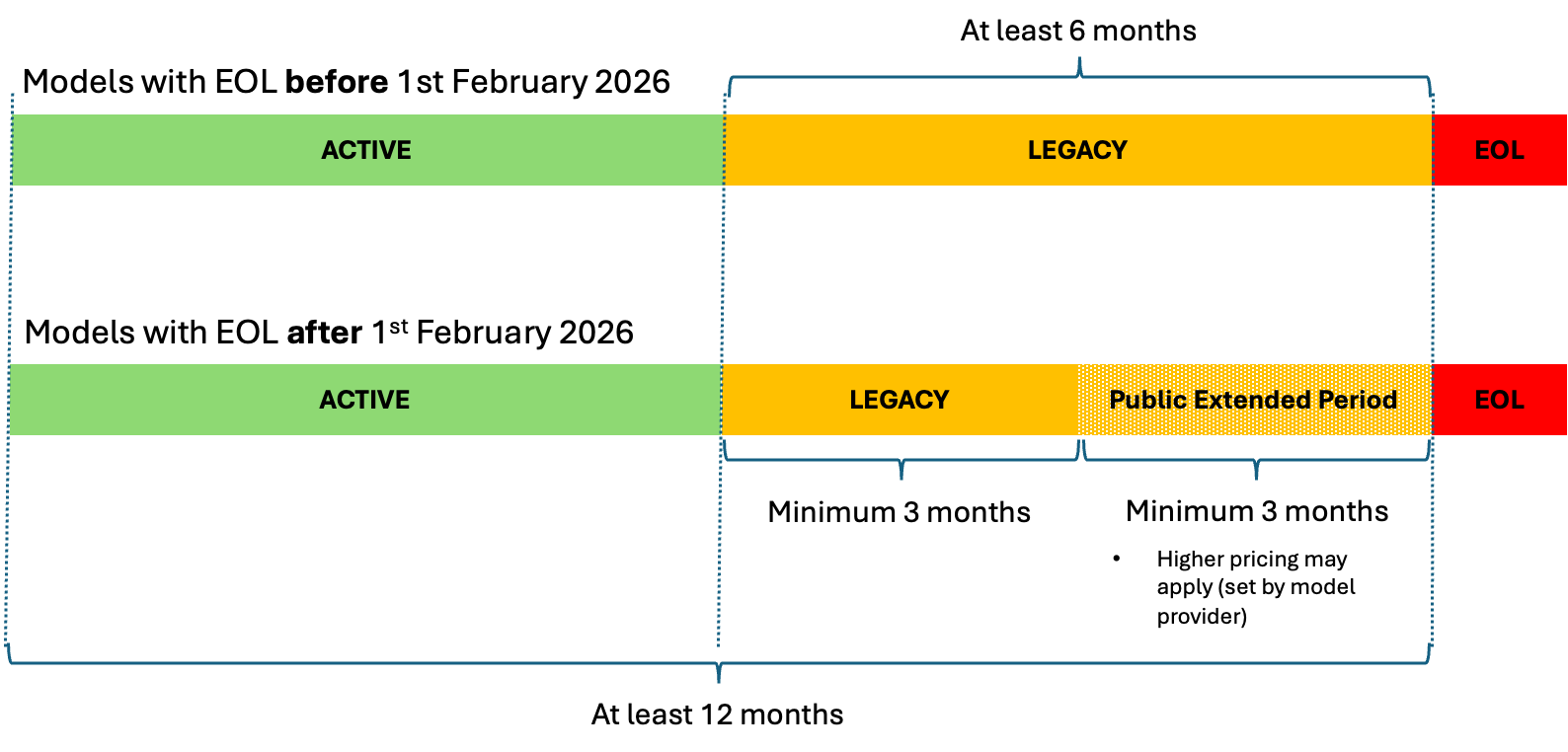
The new post on the AWS blog discusses the life cycles of models in Amazon Bedrock, their implications for users, and best practices for migrating to new versions.
Amazon Bedrock, a service from AWS, provides access to various artificial intelligence models and updates them to improve accuracy and security. A recent post on the AWS blog discusses three main stages of the model life cycle: active, deprecated, and end-of-life (EOL). Managing these stages is critical for maintaining the smooth operation of applications.
Each stage has its own characteristics. Active models receive regular updates and support, while deprecated models are available with a six-month notice before the end of their life cycle. A new "extended access" feature has been introduced, allowing the use of models for an additional three months after they transition to EOL status.
Amazon Bedrock stands out among competitors with its transparent model life cycle notification policy. Users receive notifications in advance, allowing them to prepare applications for migration to new versions. In the face of growing competition from cloud providers like Google and Microsoft, smooth transition strategies are becoming particularly relevant.
This initiative highlights the importance of strategic product life cycle management in the AI sector. For companies using AI in their processes, the lack of clear migration plans can lead to disruptions. Extending the support period for deprecated models contributes to the stability and security of AI solutions.
Sources
Replies (0)
No replies in this topic yet.
