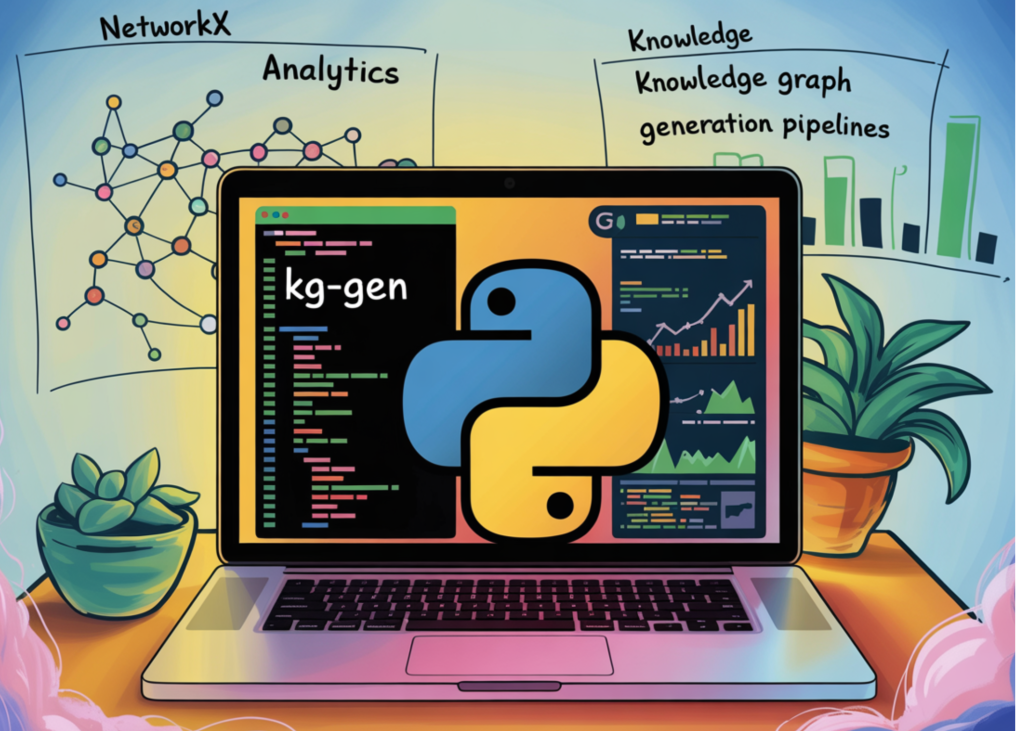
A May 20, 2026 tutorial provides a step-by-step code workflow for converting unstructured text into knowledge graphs using the kg-gen library with an LLM backend and common graph analytics and visualization tools. The guide targets hands — on developers and researchers who need a reproducible template for turning plain text, conversations and multi — document inputs into interpretable, searchable graph structures.
The walkthrough begins with dependency installation and environment setup, showing package installs for kg-gen, networkx>=3.1, pyvis, matplotlib and a community louvain package, and includes instructions for running examples in Colab — style environments or local notebooks. It documents API key configuration (OPENAI_API_KEY), model selection and initialization — setting MODEL = "openai/gpt-4o-mini" and creating the client with kg = KGGen(model=MODEL, temperature=0. results.
A basic extraction example applies the pipeline to a short family — text snippet and prints extracted entities, edges and relations to demonstrate the end-to-end output. For longer documents, the tutorial shows chunking and clustering strategies to manage scale, and explains how to merge per-chunk graphs into a single knowledge graph so that multi — document and long-form inputs remain tractable.
The guide emphasizes combining LLM-driven information extraction with established graph tooling: NetworkX is used for structural analysis, PyVis and Matplotlib for interactive and static visualizations, and exportable graph formats are shown to support downstream search and indexing workflows. It also references configuring an LLM through LiteLLM and includes display utilities tailored for notebook environments, underlining that the workflow is intended as a developer/researcher tool rather than a turnkey managed service.
Sources
Replies (0)
No replies in this topic yet.
