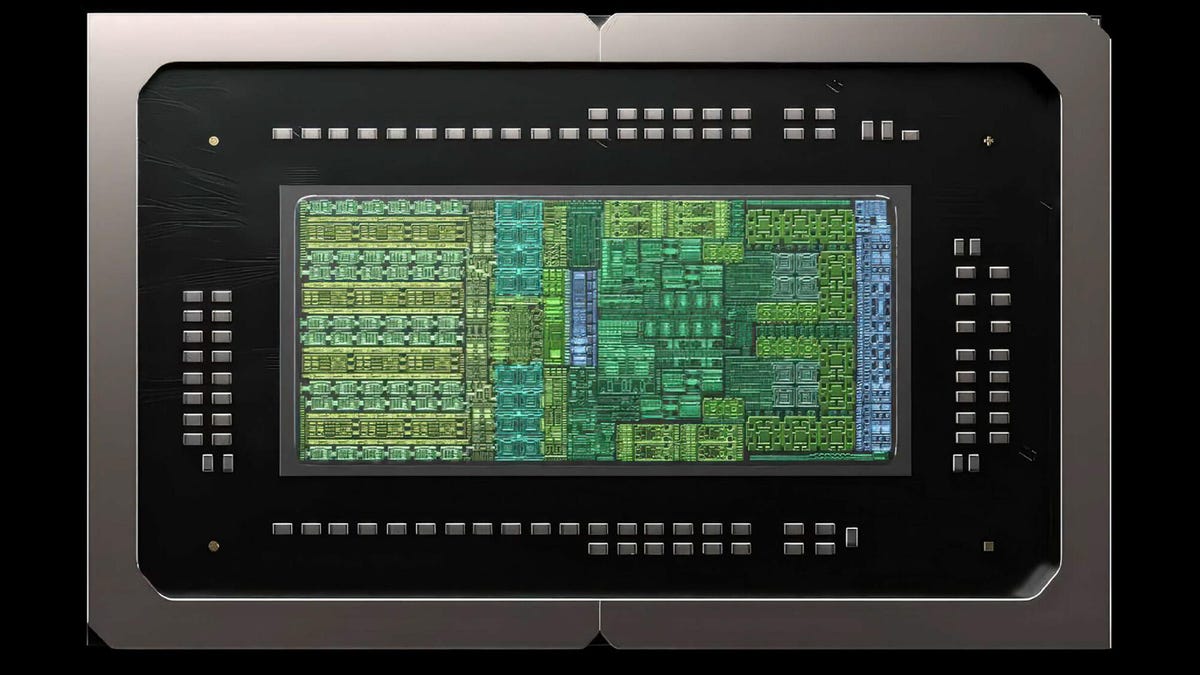
The U.S. government has internally approved a classified request to spend roughly $9 billion on NVIDIA GB10‑based systems for intelligence agencies, aiming to close a widening compute gap with commercial AI labs. The funding would buy on‑prem superchips for the CIA and NSA to support larger‑scale training and fine‑tuning of modern models; Congressional sign‑off is still required before purchases proceed. If approved, the acquisition could materially expand agency training capacity and affect component supply dynamics in the near term.
The procurement targets NVIDIA’s Grace Blackwell family centered on the GB10 chip, a hybrid package that pairs a 20‑core Arm CPU based on MediaTek’s Grace design with an NVIDIA GPU built on the Blackwell architecture. Each GB10 module includes 128 GB of LPDDR5x memory, a 4 TB NVMe M.2 SSD, and delivers about one petaflop of FP4 performance while drawing roughly 140 watts of power.
Those specifications make a single GB10 capable of handling model fine‑tuning workflows for models on the order of 70 billion parameters; estimated model storage for that scale is roughly 140 GB. The GB10’s emphasis on dense on‑device memory and efficient FP4 throughput reflects a broader industry shift toward specialized silicon optimized for modern large‑model training and inference workloads.
Scaling those chips into racks multiplies infrastructure demands. NVIDIA’s rack‑level GB300 NVL72 can host up to 72 GPUs, creating high aggregate power and cooling requirements despite an individual GB10’s modest 140 W draw. Vendors already list rack systems through retail channels with entry prices around $5,000 for baseline units, but full data‑center installations require substantial power distribution, advanced cooling, and facility upgrades.
The procurement push is explicitly framed as a response to compute advantages held by commercial labs such as Anthropic and OpenAI; intelligence officials contend that on‑prem superchips are needed for operational parity and secure handling of sensitive data. At the same time, the rapid uptake of memory‑heavy AI workloads has strained DRAM supply and pushed up component prices — dynamics a large government purchase could further influence.
For builders and procurement teams preparing for possible approval, the immediate technical implications are clear: plan for high memory and storage per node (128 GB LPDDR5x and multi‑TB NVMe), design for increased rack power and cooling capacity, and account for logistics around sourcing GB10 and GB300 systems. Availability and pricing of DRAM, SSDs, and finished racks will be key constraints if agencies proceed with large‑scale deployments.
Sources
Replies (0)
No replies in this topic yet.
