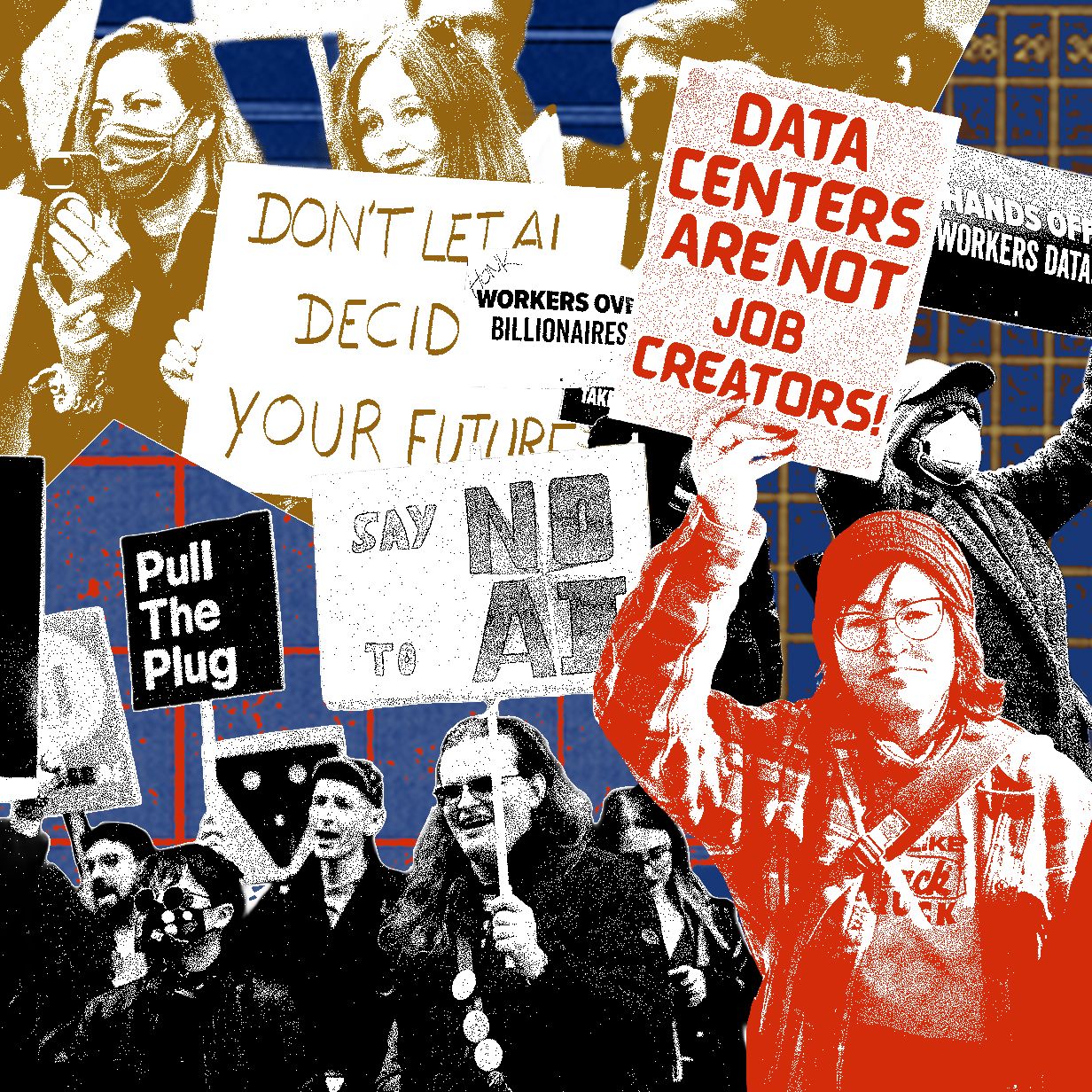
A tranche of over 1,000 pages of unpublished Department of Homeland Security, FBI and fusion‑center documents circulated among domestic law enforcement characterizes a nascent threat category it calls “anti‑tech violent extremism,” and links antitech organizing and rhetoric to possible violent activity and attacks on data centers. The materials mark a national shift in intelligence priorities toward treating opposition to technology adoption as a potential precursor to civil unrest and violence, which could broaden who is monitored and investigated.
A New York Intelligence and Counterterrorism Bureau assessment coins the phrase “anti‑tech violent extremism” and warns that “the chaotic atmosphere that may result from emergent AI technology in the next five years may fuel large‑scale protests that devolve into civil unrest and anti‑tech violent extremist activity, especially in large urban areas such as New York City.” The same report names the arrest and trial of Ziz Laota, described as an extreme rationalist tied to a small cultlike group, noting three members of that group have been charged with murder.
Those local assessments arrive alongside recent federal policy moves that widen the scope of targeted ideologies. National Security Presidential Memorandum 7 instructs the Department of Justice to target people holding beliefs it lists as “anti — American,” “anti — Christian,” and “anti‑capitalism,” and a public counterterrorism strategy released by the administration’s counterterrorism czar, Sebastian Gorka, elevates left‑wing extremists among top priorities. Taken together, these directives and the circulated reports signal a reorientation of domestic resources toward a broader set of ideological targets.
Fusion centers — the 80 state and local intelligence hubs created after 9/11 that mediate federal‑local information sharing — are already collecting intelligence framed around threats to infrastructure tied to technology. One Western Pennsylvania fusion center’s reporting warned that “adversarial actors, including state‑sponsored entities, criminal groups, and extremists” pose risks to data centers, and such fusion‑center reporting is being shared across jurisdictions.
The documents also detail concrete surveillance practices used by law enforcement. A New York assessment follows the NYPD’s prior collaboration with the FBI to monitor a Signal chat used by an activist group that coordinated volunteers at immigration‑court hearings, and other obtained records show the FBI surveilled activists in an investigation into “anarchist violent extremist actors.” Those examples illustrate how monitoring tools deployed against protest networks and community organizers sit alongside new reporting that flags anti‑tech activity.
For builders and researchers the immediate implications are procedural and reputational rather than technical: the newly emphasized category does not appear in public DHS or FBI domestic‑extremism guides and could capture a wide range of actors — from nonviolent alignment researchers to protest organizers. Teams working on AI systems, data‑center deployments and community engagement should therefore track policy memos, fusion‑center bulletins and local intelligence assessments that may define operational thresholds for investigation.
Sources
Replies (0)
No replies in this topic yet.
