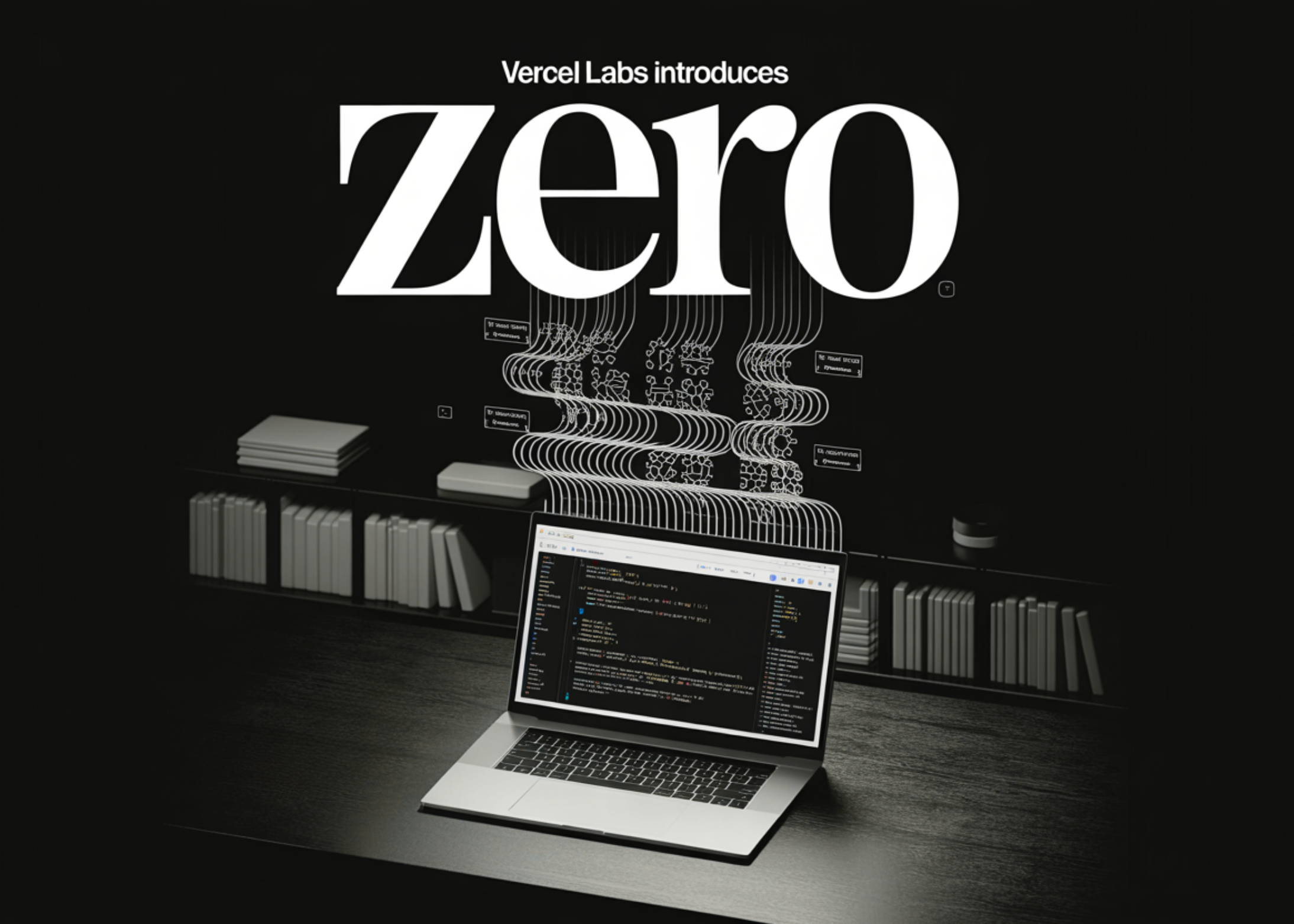
Vercel Labs published Zero, an experimental systems programming language and unified toolchain whose compiler and CLI emit structured JSON diagnostics by default so automated agents can parse errors and repair plans without brittle natural‑language inference. This change makes compiler output consumable by both humans and machine agents, enabling more deterministic edit‑compile‑run cycles for automated workflows — particularly for teams building agentic repair or deployment pipelines.
Zero targets the systems programming space alongside languages like C and Rust: it compiles to native executables, offers explicit memory control, and targets low‑level environments. The language and toolchain are optimized for small footprints — Vercel notes Zero can produce sub‑10 KiB native binaries — and its diagnostic output is intentionally structured, including stable diagnostic codes (for example, NAM003), line references, human messages, and a repair object that carries a typed repair ID.
The toolchain is distributed as a single binary exposing multiple subcommands (zero check, zero run, zero build, zero graph, zero size, zero routes, zero skills, zero explain, zero fix, zero doctor), which simplifies discovery and invocation for automated agents. Key commands are designed to return machine‑readable artifacts: zero check --json emits structured diagnostics; zero explain returns machine‑readable explanations for a given diagnostic code; and zero fix --plan --json produces a structured repair plan describing concrete edits an agent can apply.
Zero’s core language design enforces explicit, capability‑based I/O: functions must declare effects in their signatures via a capability object (the canonical entry point uses world: World). If a function lacks a World or a derived capability it cannot perform I/O, and the compiler enforces this restriction at compile time. The language also surfaces fallible operations and error propagation in signatures using keywords such as check to mark fallible calls and raises to indicate propagated error paths, avoiding hidden globals or runtime exceptions.
Vercel frames Zero as a response to a tooling gap: most existing languages and compilers produce human‑oriented error prose that forces agents into fragile parsing and out‑of‑band inference. By providing predictable tokens, stable diagnostic codes, and typed repair hints, Zero aims to make agentic edit‑compile‑run loops more robust and less dependent on brittle natural‑language parsing or documentation scraping.
For builders, practical implications include a unified, version‑matched agent guidance channel (zero skills), machine‑readable diagnostics and fix plans to automate repair workflows, and compile‑time enforcement of side‑effects that clarifies agent reasoning about I/O and security. Zero is described as experimental, and teams are advised to evaluate the toolchain and its diagnostics within their own agentic pipelines before adopting it in production.
Sources
Replies (0)
No replies in this topic yet.
