A team led by Mark Humphries at Wilfrid Laurier University reports in a May 2025 paper in Historical Methods that large language models (LLMs) can read 18th‑ and 19th‑century English handwriting on unseen documents with character error rates below 2%, completing the work roughly 50 times faster and costing about 1/50th as much as a specialized baseline. The result matters because it demonstrates a practical, lower‑cost path to make previously inaccessible archival material machine‑searchable and usable for large‑scale historical research.
The paper evaluated a corpus of 50 English letters, legal records, and diary entries from the 18th and 19th centuries. After initial experiments with GPT‑4 in 2023, Humphries’ team tested multiple LLM approaches systematically and reported that the best method produced near‑human character accuracy on documents the systems had not been trained on. Separately, users have reported feeding photographed pages to chat‑based LLMs and receiving usable transcriptions within seconds, which helps render long, unindexed runs of journals and records navigable for scholars and family historians.

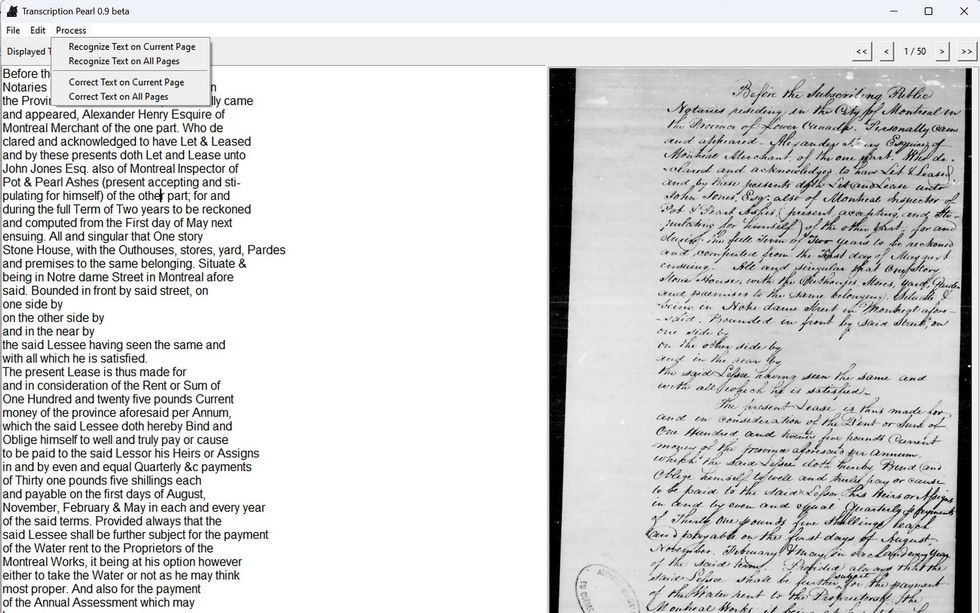
The competitive baseline matters: specialized handwriting recognition software such as Transkribus — used by over 150 universities and archives — recorded character error rates around 8% on the same unseen documents. Transkribus has announced plans to integrate large language models directly into its platform. Observers draw a line from early domain‑specific work by deep‑learning pioneers like Yann LeCun to modern LLMs, arguing that current models bring scale and generality to messier, real‑world archival material.
The practical consequences are immediate for research workflows and collection access. Pages that were effectively hidden because of unreadable or unindexed handwriting can be converted into searchable text, enabling discovery across millions of pages. Co‑author Lianne Leddy and other historians say that this capacity should accelerate projects tracing Indigenous histories and other understudied topics by making baptismal records, post journals, and pension files queryable at scale.
For builders and archivists planning rollouts, the authors offer concrete evaluation guidance: measure character error rate on truly unseen writers, benchmark throughput and cost per page, and compare end‑to‑end latency against archival workloads. Humphries and colleagues attribute the competitive edge to general models’ exposure to varied handwriting‑to‑text relationships during broad pretraining, but they also caution that LLMs are not perfect readers of every page and require validation and post‑editing in production pipelines.
Sources
Replies (0)
No replies in this topic yet.
