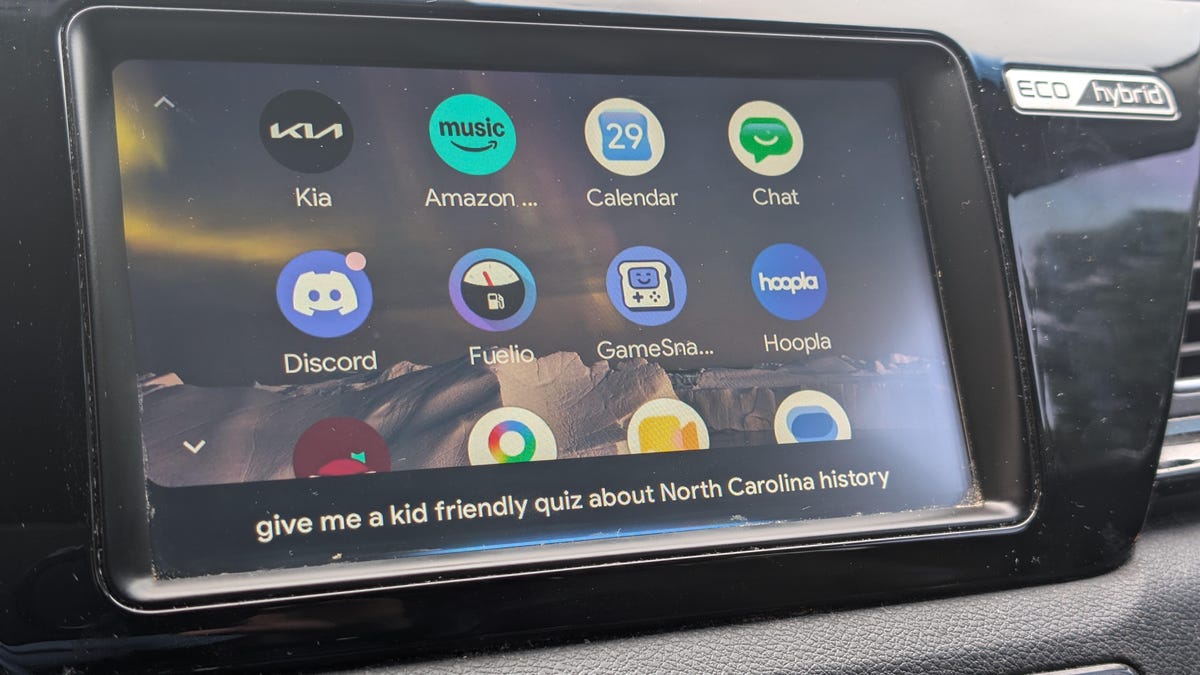
Reviewer Artie Beaty spent two months using Gemini inside Android Auto-beginning with a weekend in early April and continuing through late May-and found the integration meaningfully changed how he uses in‑car voice controls. Gemini’s improved conversational understanding reduced the need to touch a phone or infotainment screen, making drives feel both safer and more productive. That shift suggests drivers and in‑car UX teams should expect more voice‑first workflows and plan interfaces and safety checks accordingly.
Across daily commutes and short trips, Gemini accepted chained requests and handled follow‑ups more reliably than the older assistant, often completing tasks in a single utterance. The integration supports an interactive Live mode for back‑and‑forth prompts and reliably parses conversational intent such as requests for business hours or addresses, or combined instructions like “find a burger on my way home and text my wife.
Gemini also executes device‑level smart‑home actions routed through Google Home, turning idle driving time into practical continuity with a user’s home. The reviewer cited examples including lowering thermostats, turning on porch lights, opening garage doors, and even starting a smart ice maker. These actions were invoked by voice while on the road, which reduced the post‑drive friction of managing home devices.
Entertainment and passenger engagement were notable benefits: the assistant generated on‑the‑fly quizzes, trivia and choose‑your‑own‑adventure stories that referenced local places, helping pass time and keeping occupants occupied without manual device interaction. For productivity, Gemini produced message and email summaries, managed reminders, and allowed voice capture while parked or during safe moments of a drive. Beaty emphasizes that Gemini does not introduce fundamentally new capabilities compared with the prior Google Assistant; the difference lies in convenience and robustness. Where the earlier assistant often required precise phrasing or repetition, Gemini tolerates more natural language and multi‑intent utterances, which in practice increased the frequency and usefulness of hands‑free interactions.
For developers and in‑car UX teams, the update carries clear design implications: assume more voice‑first workflows, reduce unnecessary visual confirmations where safety permits, design for multi‑intent parsing, and implement robust fallbacks for ambiguous or risky requests. Mobile and IoT teams must also address authentication, intent routing, and safe confirmation flows for sensitive device actions such as unlocking doors or opening a garage.
Caveats remain. The reviewer observed times when Gemini overcomplicated simple requests or produced errors, so strong error handling and user controls are important. Despite those imperfections, the tester reported drives felt less boring, required less device handling, and felt more connected to home and daily tasks — marking a practical inflection point for voice integration in vehicle environments.
Sources
Replies (0)
No replies in this topic yet.
