Kaikaku.AI has published Epicure, an experiment that trains three near-identical embedding models on different signals so builders can see whether ingredient relationships arise from culinary practice or from molecular similarity. Presented by Jakub Radzikowski and Josef Chen, the work matters because it lets developers choose model behavior — recipe co-occurrence or chemistry — rather than rely on a single conflated embedding.
The Epicure variants differ only by their training signals. Cooc learns which ingredients co-occur in real recipes, Chem is trained solely on shared flavor molecules drawn from the FlavorDB chemistry database, and Core blends both datasets. To build the corpus the team processed 4.14 million recipes from eleven sources in seven languages, using a pipeline with Claude and Gemini embeddings to translate and clean roughly 200,000 raw terms down to 1,790 canonical ingredients.
Epicure’s multilingual corpus and explicitly split data design position it against prior public ingredient models that rely on English — only recipe sets. By separating co-occurrence and chemical signals, Epicure offers a configurable basis for different applications: favor pantry — and cuisine — driven suggestions when co-occurrence is important, or emphasize latent flavor affinity when molecular similarity is the goal.
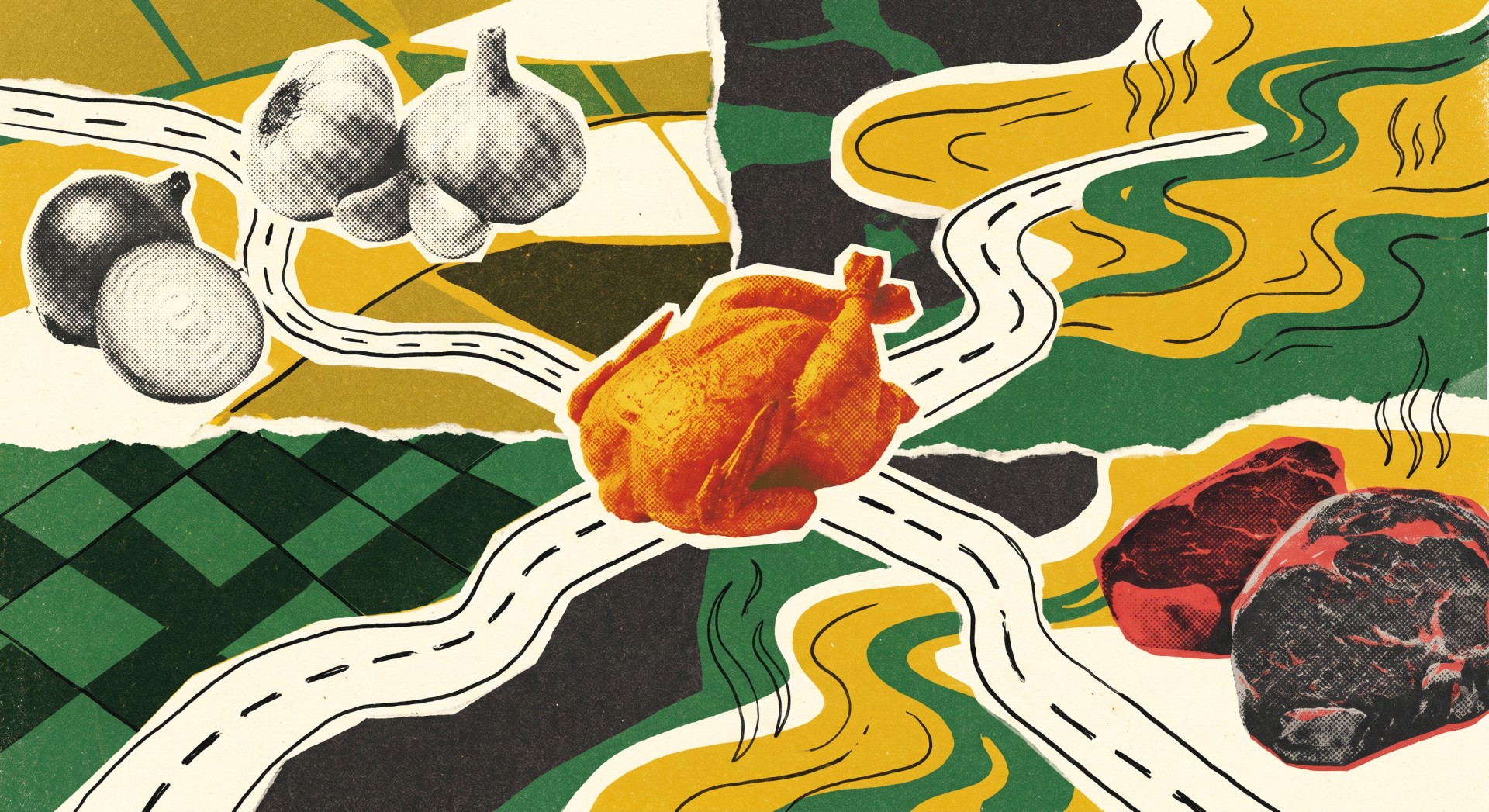
The models produce concrete and distinct behavior. For the seed “chicken,” Cooc returns common recipe companions such as garlic, onion and black pepper, while Chem surfaces flavor relatives like beef or pork. For “basil,” Cooc suggests parsley, olive oil and parmesan, whereas Chem lists oregano, tarragon and rosemary. The authors note these distinctions matter depending on whether an application aims to suggest practical recipe companions or to explore flavor analogues and substitutions.
Epicure also exposes interaction modes for builders. One is a nearest — neighbor lookup that returns ingredients closest to a seed; the other is a directional dial that shifts a seed toward a target neighborhood — at 0° the seed remains unchanged, at 60° the target’s neighborhood begins to dominate. Using the dial, shifting “rice” toward a South Asia direction surfaces curry leaf, urad dal, chana dal and fenugreek seeds; shifting “chicken” toward a Western Atlantic direction yields items like cream of chicken soup, crescent rolls and ranch dressing.
Evaluation and dataset caveats are important for implementation choices. The chemistry — driven Chem model classifies sensory labels (sweet, sour, bitter) and nutritional axes (protein, fat) more clearly than Cooc, despite never being trained on those labels. However, only about a third of the cleaned ingredients are directly anchored in the chemical database; the remaining ingredients inherit chemical signal indirectly. roughly half of the material comes from East Asian sources, while Latin American, Eastern European and South Asian cuisines each contribute single — digit percentages — details builders should weigh when deploying Epicure — derived features.
Sources
Replies (0)
No replies in this topic yet.
