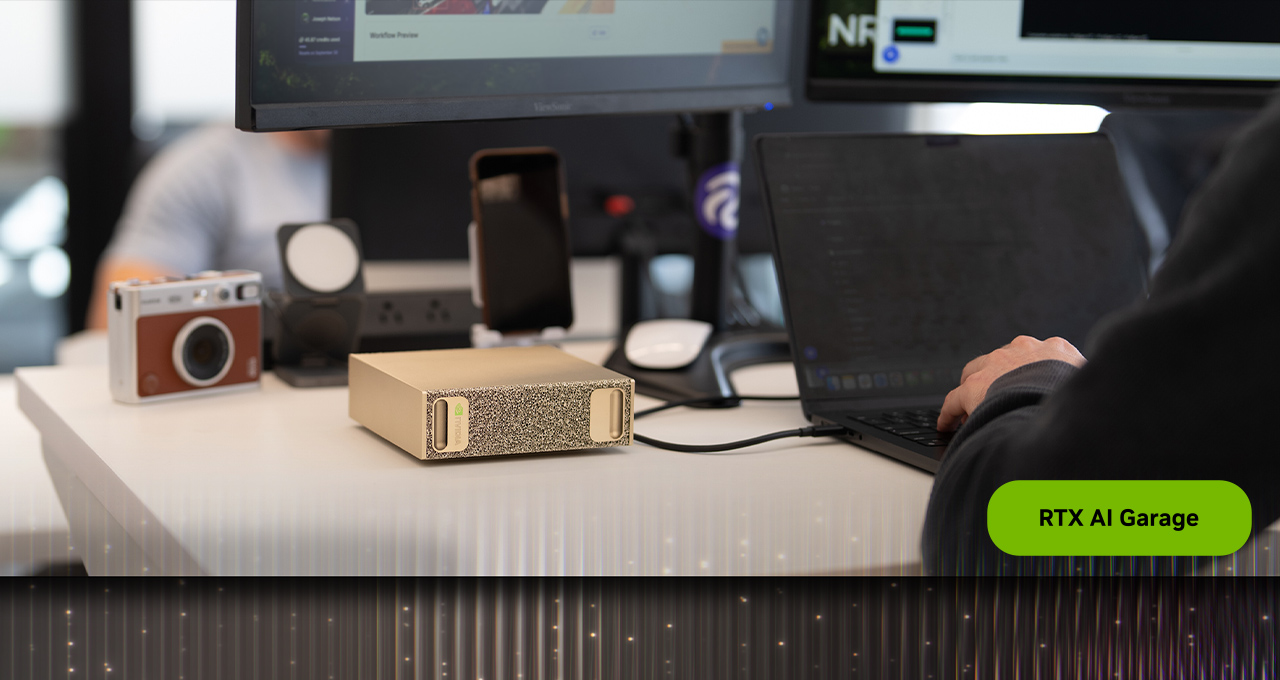
At GTC Taipei during COMPUTEX, NVIDIA introduced RTX Spark, a new category of Windows machines purpose‑built to run personal, on‑device AI agents and deliver enterprise inference on the desktop. RTX Spark systems are pitched as thin Windows laptops with long battery life and efficient desktop SKUs that can deliver up to 1 petaflop of AI compute and 128 GB of unified memory. The company also revealed DGX Station for Windows, a deskside system that brings data‑center‑class GPU and CPU capability to a Windows desktop for inference, manageability and enterprise compatibility.
The hardware launch is paired with a Windows software stack combining Microsoft’s Windows security primitives and the NVIDIA OpenShell runtime for Windows. OpenShell is designed to give developers and end users identity, containment, policy and end‑to‑end controls for agents. Leading open‑source agent projects Hermes Agent and OpenClaw will integrate OpenShell and the Windows primitives in new Windows apps, letting builders apply platform controls directly inside agent workflows.
OpenShell’s policy features are intended to make local agents both performant and private: it can route queries preferentially to models running locally, disguise or redact personal information before any cloud call, and constrain agent capabilities according to user or enterprise policy. NVIDIA positioned this approach as a direct response to the principal barrier to broad agent adoption — the need to run agents securely and privately on users’ primary PCs.
On the runtime and model side, NVIDIA is shipping upgrades aimed at faster inference and better multi‑GPU scaling. The company cited up to 2x inference performance on leading agentic models using multi‑token prediction in llama.cpp and vLLM, and announced new multi‑GPU optimizations for llama.cpp and ComfyUI. The NemoClaw blueprint will be extended across GeForce RTX, RTX PRO, RTX Spark, DGX Spark and DGX Station with streamlined installers and Hermes Agent support, while a partner identified as H Company plans RTX/DGX‑optimized models and a desktop agent harness.
NVIDIA also outlined application and workflow integrations intended for creators and content teams. Adobe is rearchitecting Photoshop and Premiere to take advantage of the stack; Blender will add NVIDIA DLSS 4.5 Ray Reconstruction; and RTX Video Frame Generation will be supported in ComfyUI. On the communications and streaming front, NVIDIA Broadcast 2.2 adds Studio Voice improvements and Elgato Stream Deck support, and Project G — Assist gains Stream Deck integration.
NVIDIA said the combined hardware and software updates, along with RTX Spark availability, are slated to arrive this fall, aiming to bring local agent capabilities across consumer‑grade and enterprise RTX and DGX systems. The rollout targets users who need low‑latency, private inference on their primary machines and enterprises seeking manageability and policy controls on desktop AI deployments.
Sources
Replies (0)
No replies in this topic yet.
